The moment when a woman realizes that she has nothing to live for—neither love, duty, purpose nor hope—holds for her the bitterness of death.You see—I’ve never had any real life…I’ve just –breathed. Every door has always been shut to me.
Valancy Stirling is 29 years old and miserable. Unmarried, without prospects and living at home as women designated to “hopeless old maidenhood” are, she lives a controlled and conventional life under the thumb of her mother, her relatives, her own fears about life and the strict moral and cultural constrictions that rule every part of her inner and outer life.
“The greatest happiness,” said Valancy, “is to sneeze when you want to.” Each day is monotonously the same. She eats the same thing for breakfast (even though she hates oatmeal), she knits with her mother and Cousin Stickles every evening (even though she hates that) and every word or action is rated and criticized by her clan. She is not even permitted to be alone in her room except when she sleeps, because people who want to be alone, could only be alone for some sinister purpose,” says her mother.
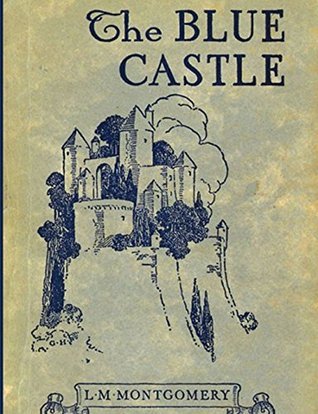
However, while words and actions can be controlled, dreams can’t. Valancy has an escape hatch, called the Blue Castle where she is queen. Each night, lying in bed, she flees to the Blue Castle from her futile, dreary world. Here, in this colorfully decorated, sensual home that she has created herself she is a beautiful woman with many suitors, who come and go at her whim. She can say and do what she wants without objection.
Against this somber backdrop that purports to last forever, “we are horribly long-lived,” Valancy laments, is a very real fear about her health. The pain around her heart has gotten worse and is now accompanied by dizzy spells and shortness of breath. Without telling her meddlesome family, she finds her own way to the doctor and is examined. Weeks later, the diagnosis comes to her in the form of a letter: she has a terminal heart ailment and has between a few months to a year to live and must live a quiet moderate life until the end. So much for those health genes.
I’ve been trying to please other people all my life and failed…After this I shall please myself. I shall never pretend anything again. I’ve breathed an atmosphere of fibs and pretenses and evasions all my life. What a luxury it will be to tell the truth! I may not be able to do much that I want to do but I won’t do another thing that I don’t want to do. Mother can pout for weeks—I shan’t worry over it.
With this prognosis, Valancy lets loose! Her pent up rage and emotions drive her to break all the rules of verbal conduct. She cannot keep her mouth shut for anyone. She tells her mother exactly what she thinks, pokes fun at her relatives who have been poking fun at her all her life and even swears, causing her surprised family to believe she is mad.
Breaking the taboo against leaving home as an unmarried woman she moves into the house of Cecilia Gay, an old friend who is dying of a lung disease who now lives with her father, is shocking enough. After her friend dies, realizing she cannot give up the freedom of being out of her family home, she asks Barney Snaith, a man she has gotten to know while caring for Cissy, to marry her. She tells him about her heart condition, so the marriage will only be for short while. He agrees and they marry, which pushes her family over the edge.
My Thoughts
Valancy Stirling has a lot in common with Montgomery’s other heroines, Anne Shirley and Emily Byrd Starr. They are similarly brought up in strict, conventional homes, surrounded by elders who toe the moral and cultural lines of the day. When these young women are ‘too emotional’ and speak their thoughts and feelings too freely or bristle against duties they don’t believe in or can’t accept, they are punished for acting out of the norm and breaking long-held rules. Yet, they push on, unwilling to give up on their dreams and a life that matters
Valancy is also a product of that liminal state of the older unmarried woman who though chronologically is an adult is still seen as a child due to her lack of a husband. There is no place for her in a society that only gives women worth and status by the luck of having a husband.
As only one of two novels by L.M. Montgomery purportedly geared to adults, I would have to disagree. This is a novel of a woman breaking free from the confines of a narrow world view in order to discover what is truly right for her. She breaks through her fears of safety and security to walk off into the unknown. She literally finds her voice and her own moral compass. I think this book is perfect for adolescent girls, who could benefit from Valancy’s journey.
 Classic Laurie