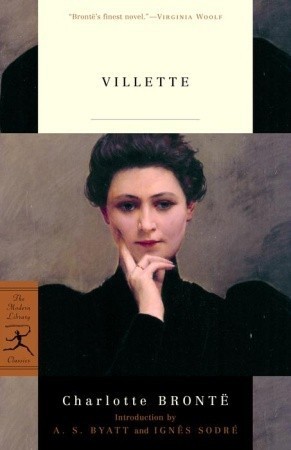
Villette (1853), Charlotte Bronte

I had nothing to lose. Unutterable loathing of a desolate existence past forbade return. If I failed in what I now designed to undertake, who, save myself, would suffer? If I died far away from—home, I was going to say, but I had no home—from England, then, who would weep?

Jane Eyre is one of my very favorite books. As such it has cast a spell over any desire to read Charlotte’s other novels. But I broke that spell with Villette and while it didn’t knock down my favorite it was a wonderful reading experience.

But it is an odd book. The narrative is filled with the supernatural, with sounds and ghosts real and imagined, madness, creepy streets and gardens, a heroine who not only talks to herself but answers back. And it abounds with coincidence, serendipity or the saving grace of Divine Providence, however one might want to call it.

Lucy Snowe is like Jane, an orphan cast off and adrift in the world, although Lucy is a young woman, not a child, when she is forced by circumstances out of her godmother’s care and left to her own devices to find her way. Through a series of the aforementioned coincidences she is saved by acquaintances, old school chums, being in the wrong place at the right time to finally finding love and security.

Snowe is often convinced she will die when yet another position as a companion or as a teacher goes awry. Through inner dialog she is ready to meet her fate with a philosophic resolve. Her many conversations with Reason are quite profound.

Often has Reason turned me out by night, in midwinter, on cold snow, flinging for sustenance the gnawed bone dogs had forsaken: sternly as she vowed her stores held nothing more for me–harshly denied my right to ask better things…Then, looking up, have I seen in the sky a head amidst circling stars, of which the midmost and the brightest lent a ray sympathetic and attent. A spirit, softer and better than Human Reason, has descended with quiet flight to the waste—bringing all round her a sphere of air borrowed of eternal summer, bringing perfume of flowers which cannot fade—fragrance of trees whose fruit is life, bringing breezes pure from a world whose day needs no sun to lighten it.

Lucy fights with Reason and Divine Providence often, each whispering opinions to her weary mind. She has been made mad by them, but they have also healed her.

A little reading about the reception of Villette in Bronte’s time is fascinating. As a reader of this book in the 21st century, I see it as an honest portrait of a woman who has no family—male relatives—to support or protect her, she is like many in Bronte’s time. Snowe’s life is in her own hands to be made of what she can and at times it isn’t pretty. Bronte’s contemporary, Matthew Arnold, had a decidedly bitter experience with the journey of Lucy Snowe, calling the novel, “hideous, undelightful, convulsed, constricted…one of the most utterly disagreeable I have ever read. Her mind contains nothing but hunger, rebellion, and rage. Which the only response can be, “Exactly!” He did not understand that he proved Bronte’s point about women in Lucy Snowe’s situation.

If the novel was only about the Ginevra Fanshawe and Polly Home type, the lovely young girls of status and wealth, that would have made a “pretty novel,” but not a very interesting one. Bronte chose honesty over superficiality giving Lucy Snowe strength, instead of helplessness modeling a heroine that speaks to and gives hope not only to women in Bronte’s time, but to the situation of many women today.

Welcome to my Blog!

Hello and welcome to my blog!

I am an eclectic reader with interests in 19th and early 20th century literature, religion, and natural history.

Some of my favorite authors are Edith Wharton, Nathaniel Hawthorne, Anthony Trollope, Diane Ackerman and the often anonymous writers in the realms of myth and legend. I count Paramahansa Yogananda, Madeleine L’Engle, Abbie Graham, Abraham Joshua Heschel, the worlds of Narnia, Nature and the night sky as my spiritual inspiration.

My blog is a reading journal rather than a book review platform; a sharing of thoughts and reactions to what I read and not always a linear narrative of the story. I don’t rate books, give stars or points, but I am honest about what I read, even if that means admitting I dnfed a book. I sometimes look into a writer’s biography or how their book was received in its time. I love to get swept up into a book, the characters’ journeys and savor all the historical details of daily life.

Besides reading I count stargazing as a major passion, along with homemade pizza and films of the Golden Age of Hollywood. I am a winter gal and love cold days and dark skies, but I was born, raised and live in Southern California near the beach and have had to make the best of its sunny moderate temperatures 🙂 When I am not reading or looking up on a clear night I like exploring California history on an old fashioned Sunday drive or going trail walking through our many natural spaces.

Please feel free to comment on any of my posts.

~Laurie

***I ran a book blog for many years, called Relevant Obscurity, but I deleted it in 2023 due to medical issues. I didn’t think I’d be able to sit at a desk and write ever again. But things have changed dramatically and I am so happy to be able to blog again. I have uploaded many of those reviews in the Book Review tab.

Happy Trails and Happy Reading!

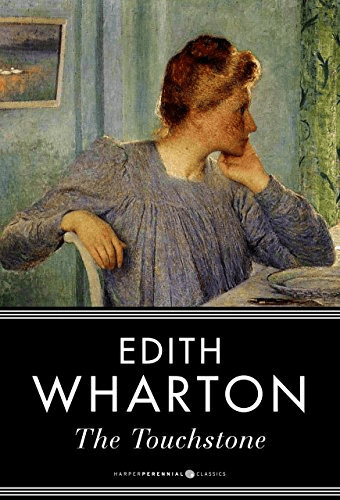
The Touchstone (1900), Edith Wharton

The Touchstone sets up a moral dilemma for Stephen Glennard, whose career is floundering making it impossible to marry the woman he loves. He is resentful of his contemporaries who always find a place at someone’s dinner table or invitation to the opera, while he has to calculate cab fares, clothing and food to make ends meet sacrificing the important contacts that could improve his life.

But one evening when at his club his eyes light on a name in a headline. Someone is soliciting information on Margaret Aubyn, a woman he had a relationship with. It ended when she left for England, though she continued to write to him for many years. The article states specifically, “She had so few intimate friends…that letters will be of special value.” Glennard has hundreds.

A friend helps him find a publisher for the letters, he being the go-between that keeps Glennard’s name out of any correspondence or notoriety. Based on the projected windfall, he marries Alexa Trent. They move to suburban New York City and for a year all is calm. When the letters are published Glennard is shocked to learn of the sympathy most readers, and his social circle, feel toward Margaret Aubyn. Slowly his conscience begins a slow downward spiral of guilt and for a time is haunted by her presence. He fears exposure and the reaction of his wife, who seems to have taken on a kind of protective stance against the exploitation of this woman.

The story had me glued to the narrative until the very last sentence, because the outcome was never assured. Wharton does not give the reader a firm conclusion to either Glennard’s guilt or Alexa’s acceptance. This is not a spoiler, this is pure Wharton!

My Antonia (1918), Willa Cather

More than any other person we remembered, this girl seemed to mean to us the country, the conditions, the whole adventure of our childhood. To speak her name was to call up pictures of people and places, to set a quiet drama going in one’s brain. 

Willa Cather is an incredible nature writer. She loses me to my imagination as she describes winter, the spring, summer and autumn through the hardships and triumphs of the old and new Scandinavians and Bohemians (Czechoslovakia) who have settled in the Nebraska prairie. Hoping to escape the poverty of the old country, some make a good go of it as they get to know the personality of this new land. But some refuse to adapt from the old ways and wallow endlessly in debt, depression and disease. The first generation tries to help the newcomers and there is some success, but there are always holdouts, too stubborn to take risks, try new methods or respect the different personality the seasons have here.

This book is so much about the land. The land as a wild mystery to the new immigrant farmers, but also as beauty and familiarity to the generation that settled before. This generational divide is a marked characteristic of this book.

Told as a reminiscence about his life on the prairie after he is orphaned, Jim Burden is sent from New York to live with his grandparents on their farm in Nebraska. He brings the struggles, the love and tragedies of the myriad characters to life, including his Ántonia, an independent Bohemian girl, who embodied the best and the worst of the old world and the new.

As we walked homeward across the fields, the sun dropped and lay like a great golden globe in the low west. While it hung there, the moon rose in the east, as big as a cart-wheel, pale silver and streaked with rose color, thin as a bubble or a ghost-moon. For five perhaps ten minutes, the two luminaries confronted each other across the level land, resting on opposite edges of the world. In that singular light every little tree and shock of wheat, every sunflower, stalk and clump of snow-on-the-mountain, drew itself up high and pointed, the very clods and furrows in the fields seemed to stand up sharply. I felt the old pull of the earth, the solemn magic that comes out of those fields at nightfall. 

Sometimes I went south to visit our German neighbors and to admire their catalpa grove, or to see the big elm tree that grew up out of a deep crack in the earth….Trees were so rare in that country, and they had to make such a hard fight to grow, that we used to feel anxious about them, and visit them as if they were persons. 

When Spring came, after that hard winter, one could not get enough of the nimble air. Every morning I wakened with a fresh consciousness that winter was over. There were none of the signs of spring for which I used to watch in Virginia, no budding woods or blooming gardens. There was only—spring itself; the throb of it, the light restlessness, the vital essence of it everywhere; in the sky, in the swift clouds, in the pale sunshine, and in the warm high wind—rising suddenly, sinking suddenly, impulsive and playful like a big puppy that pawed you and then lay down to be petted. If I had been tossed down blindfolded on that red prairie, I should have known that it was spring.

Persuasion (1817), Jane Austen

I didn’t expect to go from Mansfield Park to Persuasion, but it turns out I wasn’t ready to leave the Austen universe. Persuasion was the only book I hadn’t read and it was a pleasure to get to know Anne Elliot and the characters that make up her world.

I found the premise to be fairly simple: girl and boy like each other, but family friend and confidante is opposed and forces their break up. After 8 years there are sparks still. Will they be quenched or ignited?

One of the things I liked about this book is this is set up almost from the beginning so the reader assumes the outcome, but there are enough cogs in the wheel that you are not quite sure. You have to wonder if they DO get there, how will they get there. At least that’s how I approached the story.

At 28, Anne, who has lost her “bloom,” is considered an old maid, even though her older sister Elizabeth is still unmarried, but she’s prettier. That’s a whole thesis right there, but let’s move on. Their younger sister Mary, married with two children, relies on Anne to rescue her from her (psychological?) maladies with a long stay in which Anne meets her brother in law’s parents and his sisters and essentially rescues them from their troubles. Anne is the rock, the stable one, the ‘go to’ for love advice, household problems and how to find a good book. She is neglected by her father, who has lost his fortune and who favors Elizabeth and it is heartbreaking to hear him talk in negative ways about her looks and prospects, sometimes right in front of her. It is telling that both he and her sisters, the people closes to her, take her for granted, yet everyone else in their larger social circle find her indispensable and only see her good qualities. How sadly common for the so-called “old maid.”

We read as Anne catches the interest of two men, besides Captain Wentworth with whom she called things off all those many years ago. And though she was being played by her cousin Mr. Elliot, I was not sure how she was going to find the evidence that all was not right with him. Austen gives us then, Anne’s school friend whom she meets in Bath and is privy to the truth about Mr. Elliot. While I found that revelation scene to be contrived and overly dramatic, the melodrama of the telling was quite enjoyable.

And finally, when that discussion occurs about the fickleness between men and women that makes it impossible for Captain Wentworth to keep quiet about his true feelings for Anne….Not to give away spoilers, but that love letter…oh my.

Anne Elliot as a person is emotionally strong when others give in and handles accidents and disasters with a concerned, but firm hand. She is patient, skillful and can reign in her emotions for the greater good. She is the person, who would quell panic and find the way forward if she were with you lost on a desert island!

The Magician’s Nephew (1955), CS Lewis

“Narnia, Narnia, Narnia, awake. Love. Think. Speak. Be walking trees. Be talking beasts. Be divine waters.” Aslan

And the longer and more beautiful the Lion sang, the harder Uncle Andrew tried to make himself believe that he could hear nothing but roaring….And when the Lion spoke and said, “Narnia awake,” he didn’t hear any words: he heard only a snarl. And when the Beasts spoke in answer, he heard only barkings, growlings, bayings, and howlings.

This is my second read through and I still found the first part dull, the magic not particularly, well, magical. I remember thinking the first time around I would stick with it, because I wanted to read the series. Similarly, this time I felt the same dull disinterest. 

And then suddenly, Aslan appears and the book takes a most promising turn!

The Story

Digory and Polly, neighbor children who are thrust into the void by the power of the magic rings invented by Digory’s Uncle Andrew land in a world made up of innumerable ponds and woods. It is a new world without flora or fauna, but that changes as a magnificent and glorious sound pierces the air and the children realize Creation is being sung into being before their very eyes!

There were no words. There was hardly even a tune….It was so beautiful he [Digory] could hardly bear it…Then two wonders happened at the same moment. One was that the voice was suddenly joined by other voices; more voices than you could possibly count….The second wonder was that the blackness overhead all at once, was blazing with stars….a thousand points of light leaped out—single stars, constellations, and planets, brighter and bigger than any in our world….If you had seen and heard it, you would have felt quite certain that it was the stars themselves which were singing, and that it was the First Voice, the deep one, which had made them appear and made them sing….The Voice rose and rose till all the air was shaking with it; the sun rose. You could imagine that it laughed for joy as it came up….the earth was of many colors; they were fresh, hot and vivid. They made you feel excited until you saw the Singer himself, and then you forgot everything else. It was a Lion and stood facing the risen sun. Its mouth was wide open in song….

Creation being formed out of Song and love and beauty by a Lion who is at once Creator and Sacrifice (LWW). Because, yes, one cannot but help to see that connection. Aslan is birthing the world through the sound of his Voice, bringing forth the first plants, the new starry heavens, the sun and wind and all the animals, birds and beings that will populate this new world.

Out of the trees wild people stepped forth, gods and goddesses of the wood; with them came Fauns and Satyrs and Dwarfs. Out of the river rose the river god with his Naiad daughters. And all these and all the beasts and birds in their different voices, low or high or thick or clear, replied. “Hail, Aslan. We hear and obey. We are awake. We love. We think. We speak. We know.

Aslan tells the animals and other sacred beings to guard and protect the land because evil has been let loose. The Witch followed Digory and Polly into Narnia, but for now she is headed for lands far away and won’t trouble Narnia for hundreds of years. In the meantime Narnia must be made strong. Aslan sends the children on a journey to find the fruit of a special apple tree that once planted in Narnia will reign over it against all evil. When they return Aslan tells Digory to throw the apple a certain distance and it settles into the soft mud. In the morning the tree is big and filled with fruit. Digory is certain an apple from this tree will help his mother’s cancer and Aslan gives him one to take home.

When Digory and Polly return to London, Digory’s mother eats the apple and is cured. Digory plants the core and a tree grows again overnight. As the years pass and the children grow up so does the tree which has a symbiotic relationship with the one of its origin: it wiggles a bit on days when it is windy in Narnia, even when there is no wind in London. But its shaking has weakened its roots, and one wind-filled day in London the tree topples over. Now middle aged and with unfaded memories of Aslan and Narnia and all he saw there, Digory cannot just chop up the tree for fire wood. So he takes part of the tree and builds a wardrobe which he puts in his house in the country….

The Controversy: Chronological Order or Published Order

In my Harper Trophy editions, The Magician’s Nephew (MN) is the first in the series with The Lion the Witch and the Wardrobe (LWW) second. I didn’t know any better and read this first. I had struck up a conversation with a woman in a bookstore who is an avid Narnia fan. She told me that after Lewis published the LWW a friend asked him about the lamppost that appeared out of nowhere and in order to clear that up he wrote The Magician’s Nephew. In that moment it made sense to me to stick with the order in my series. But what did Lewis himself say?

In 1957, an 11-year-old boy named Lawrence Krieg was preparing to read the Narnia books for a second time. Lawrence wondered if he should re-read them chronologically, but his mother felt he should stick with the original published order. So, Lawrence wrote a letter to the author and received this response:

“I think I agree with your order for reading the books more than with your mother’s. The series was not planned beforehand as she thinks. When I wrote The Lion I did not know I was going to write any more. Then I wrote P. Caspian as a sequel and still didn’t think there would be any more, and when I had done The Voyage I felt quite sure it would be the last. But I found as I was wrong. So perhaps it does not matter very much in which order anyone read them.”

C. S. Lewis, letter dated, 4/23/57

Douglas Gresham, stepson of C.S. Lewis

“[HarperCollins] asked, ‘What order do you think we ought to do them in?’  And I said, ‘Well … I actually asked Jack himself what order he preferred and thought they should be read in.  And he said he thought they should be read in the order of Narnian chronology.’  So I said, ‘Why don’t you go with what Jack himself wanted?’

Lewis scholars almost universally agree that the original published order is superior. They suggest that The Lion, the Witch and the Wardrobe is more initially captivating than The Magician’s Nephew, that certain lines in Lion do not make sense when the book is not read first,and that Nephew has greater mythic power when read as a prequel.

I think I agree with the assessment that LWW is best to read first, if only because the first half of MN is not so interesting. It would be a shame to turn off a young reader of this marvelous series, because the first one they read doesn’t capture their imagination. Though I didn’t know better and read MN first, I do wish I’d saved it and read the books in published order. I got so much more out of it this time around; the story’s magical qualities come to the fore with the writing, which for me is ‘pure magic.’ I imagine though reading order will be an argument that will last until the end of time!

The Marne (1918), Edith Wharton

Whither thou goest will I go, thy people shall be my people…” Yes, France was the Naomi-country that had but to beckon, and her children rose and came.

Edith Wharton had been living in France for many years when WWI began. Like many in Europe, Wharton was frustrated and angry at America’s reluctance to enter the war and The Marne was written in response. The main character, Troy Belknap, is her voice against this hesitation, a call to save what she has come to love. This is a very emotional Wharton that I have not seen before. Through Troy, whose yearly visits to France with his parents, has  given him a love for the country, there is something very personal that Wharton brings to this story.

Troy is very young when he first summers in France. His parents arrange a tutor for him in all the subjects that interest him and every year he sees this same tutor, Paul Gantier. As he grows older, his friendships and enjoyment with his studies grow. It is an easy life of long motor drives, sightseeing, archaeological trips and the lovely sights to stoke a precocious imagination.

As the family travels each summer they often stay in the same hotels and inns and Troy has become very attached to one particular family and looks forward to seeing them every year. He has an insatiable urge for knowledge and getting the most out of his summers in France. He calls France, “his France.” His love for the country is deep in both the past and present, loving history as well as attentive to the people he meets wanting to know their story. He is devastated the summer the Germans begin their march toward Paris when his tutor has to leave him to fight. He is too young to go himself and is angry that the US has not stepped in.

His family, like many foreigners, are stranded once the fighting begins. Some are able to get to England, but find the same issue there. Wharton does not hold back her contempt at the utter narcissism that they feel their plight should be taken into consideration above all others-“…We’ve really spent enough money in Europe for some consideration to be shown us…” For the first time in their lives they are asked to think of others and rather than see where or how they could help the country they use for status and reputation at home, they are indignant they aren’t taken into consideration first. Troy is outraged at their egotism spends as little time as possible with them.

The misery of feeling himself a big boy, long-limbed, strong-limbed, old enough for evening clothes, champagne, the classics, biology, and views on international politics, and yet able to do nothing but hang about marble hotels and pore over newspapers, while rank on rank, and regiment on regiment, the youth of France and England, swung through the dazed streets and packed the endless trains—the misery of this was so great to Troy that he became, as the days dragged on, more than ever what his mother called callous, sullen, humiliated, resentful at being associated with all the rich Americans flying from France.

Once back in New York City a sort of ‘one-upmanship’ is occurring with these same people who complained that they were not given priority in leaving, but are now telling anyone who would listen about their privations and hardships.

“The tragedy of it—the tragedy—no one can tell who hasn’t seen it and been through it,” Mrs. Belknap would begin, looking down her long dinner table between the orchids and the candelabra; and the pretty women and prosperous men would interrupt their talk, and listen for a moment, half absently, with spurts of easy indignation that faded out again as they heard the story oftener. As more of the once stranded civilians return home they have fresh tales to tell and Mrs. Belknap finds herself out-storied, out-charitied, and out-adventured. She is pushed aside to make room for others, people want something newer….

As soon as he turns 18, Troy returns to France as an ambulance driver. And one day he is met on the road by a truck load of American soldiers. America has finally joined with France and England against Germany! “There they went, his friends and fellows, as he has so often dreamed of seeing them, racing in their hundreds of thousands to the rescue of France; and he was still too young to be among them, and could only yearn after them with all his aching heart!”

But at the last moment, one of the trucks stops and a young man calls out to him to hop in the truck, “come and help!” And just like that Troy, without a moment’s hesitation, leaves the ambulance and becomes a soldier. As the truck rolls on he is given some instruction, though he is also filled with guilt about leaving his position. At the first battle he is wounded and brought to a field hospital. Regaining consciousness it turns out that was the great Battle of the Marne. The Allies had pushed back the Germans and the advance on Paris has been checked! But the oddest thing happened. Troy’s wound was severe and in semi consciousness he saw Paul Gantier, the young man who had been his childhood tutor, lift him up until he felt himself floating. Regaining consciousness at the hospital, the medics told him that his rescue had been incredible, but that no one knew his rescuer, not his name or where he had gone to. And then he just disappeared. A stunned Troy held his tongue-his tutor had died near the beginning of the war….

Published in 1918 with battles still raging, this is more a book about the attitudes at the home front than the war itself. And with the war still on, this book is published as a type of propaganda, guilt propaganda if there is such a thing, I would call it. And perhaps not directed at middle America, but to those of the upper classes who can make a difference, the ones who call the shots and who supposedly love France. 

Wharton wrote another novel about the war and a few nonfiction. I will get to those at some point and will be interested to see if they are as passionate.

There had never been anything worthwhile in the world that had not had to be died for, and it was as clear as day that a world which no one would die for could never be a world worth being alive in.

Every stone that France had carved, every song she had sung, every new idea she had struck out, every beauty she had created in her thousand fruitful years, was a tie between them that all civilization was bound up in her, and that nothing that concerned her could concern her only.

For France was his holiday world, the world of his fancy and imagination, a great traceried window opening on the universe. And now, in the hour of her need, all he heard about him was the worried talk of people planning to desert her!

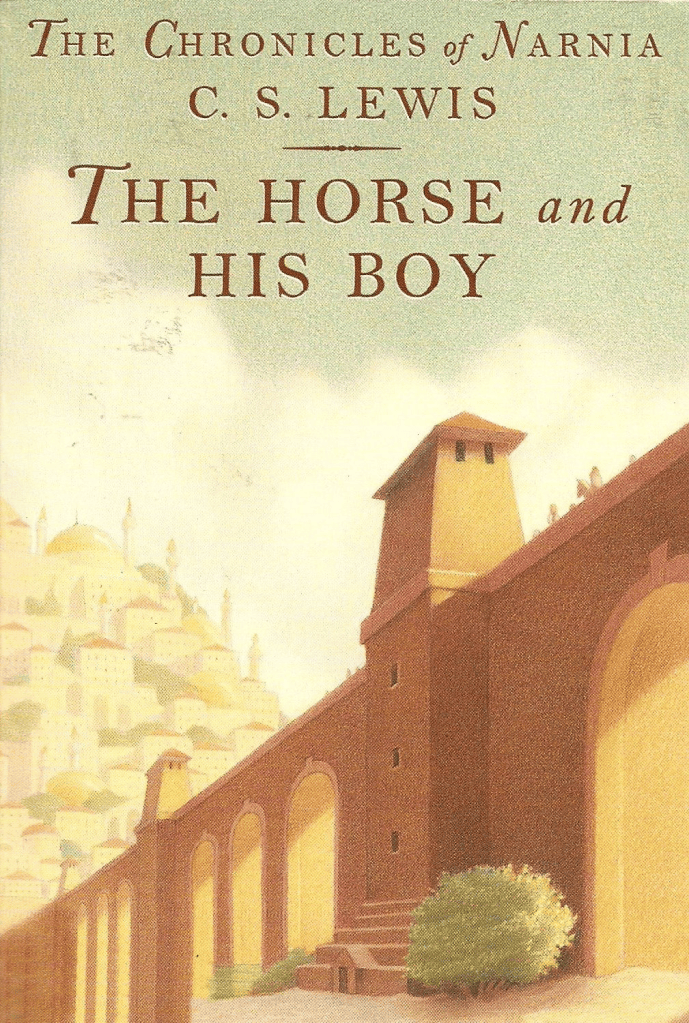
The Horse and his Boy (1954), CS Lewis

I’m a free Narnian.”

We’re free Narnians.

He was a free Narnian horse.

“I have been longing to go to the North all my life.” “Of course you have. That’s because of the blood that’s in you. I’m sure you’re true Northern stock.”

For a series of books written for children CS Lewis sure doesn’t sugar-coat childhood. He tackles bullying, the separation of families by war, the betrayal of siblings against each other and in this one child slavery, physical abuse and forced marriage, just to name a few. In The Horse and His Boy, there is less magic and playfulness and more realism. Lewis is telling a different kind of story here, where Aslan is mostly absent and Shasta and Aravis, the main characters, are on their own. In previous stories, the children knew they were on a mission for Aslan. This time, however, both have never even heard of Aslan and only find out later he has been guiding them from the beginning. But in the moment, their desire to escape, their plans and strategies have been due to their own will and wits.

Lewis also uses a different storytelling technique in this novel than he does in the others. In all the other books he is the creator of all the fantastic beasts, the flora and fauna and other beings. In this novel, he borrows the Calormen from a known culture, who are based on a middle eastern country, or tribe, or people, and sadly, are full of all the stereotypes one could imagine. At present, he has been rightly criticized and perhaps should have rethought this, however, I believe the story is still a good one and should be taken in the context of the time he was writing during which Asia and the Middle East were rather mysterious to the West.

When the story begins we meet Shasta, who as a young child was found drifting in a boat and is now the property of Arsheesh, a poor fisherman. Shasta is beaten regularly at Arsheesh’s whim. There are days when Shasta wants to escape and feels a pull to the North. Arsheesh is only too happy to turn him over to a Calormen nobleman who wants to buy him and while awaiting his fate in a stable Shasta finds that one of the horses can talk. Bree is a Narnian Horse belonging to this man, although he has kept his identity secret, and is treated cruelly, which both realize will be the same fate for Shasta. The two contrive a plan to escape to Narnia. On the road they meet another escapee from these lands, Aravis who is fleeing an arranged marriage. She is riding her horse, Hwin, who also happens to be a Talking Horse from Narnia.

The four team up, but it is a perilous journey and the children are challenged by the desert, ghoulish imaginings in the night, stalking, by what seem to be many lions, in which Aravis is wounded and an army trying to stop them that also wants to capture Narnia.

While this is very much an escape story, it is also a story about freedom and identity and about discovering who you really are and in remembering who you are. “I am a free Narnian,” says Bree repeatedly. Though long captured he hasn’t forgotten he is a noble war horse from Narnia and he is a free horse, belonging to no human.

Excuse me, Tarkheena [Aravis]…We’re free Narnians, Hwin and I, and I suppose, if you’re running away to Narnia, you want to be one too. In that case Hwin isn’t your horse any longer. One might just as well say you’re her human.

Shasta has always been attracted to the North (where Narnia is located), not the South even though southern travelers often come to sell fish and have great stories to tell. He knew who he was, before he was aware of it. And in a fairly obvious twist of fate it turns out Shasta’s identity is more than that of a common Narnian citizen.

And what to make of this Aslan? Though largely absent throughout the book when he appears he is often distant, distracted and removed. In a very different relationship with the main characters in this book than in previous novels, he is allowing them their journey without micromanaging the details. I believe this is a conscious shift in the message Aslan brings up to this time between what it means to be a child with all the hands-on guidance those ages entail to the next stage when you go out in the world and experience it through what you have been taught so far, including the making of mistakes. And with this new stage is the responsibility you accept for these mistakes, as Aravis learned when she experiences the consequences of a selfish act made against someone more vulnerable and much less socially powerful.

“It was I who wounded you,” said Aslan. Do you know why I tore you?”….The scratches on your back, tear for tear, throb for throb, blood for blood, were equal to the stripes laid on the back of your stepmother’s slave because of the drugged sleep you cast upon her. You needed to know what it felt like.” 

That is harsh. But a very good example of a true understanding of an “eye for an eye,” which is not the same punishment, but a fitting punishment. 

And then there is this passage that seems very odd, but I connect it to the idea of identity. This is Aslan’s response to Shasta when he meets him for the first time and asks who he is.

“Myself,” said the Voice, very deep and low so that the earth shook: and again “Myself,” loud and clear and gay: and then the third time “Myself,” whispered so softly you could hardly hear it, and yet it seemed to come from all round you as if the leaves rustled with it. 

It sounds like Aslan is trying to justify himself to more than Shasta. I would like to know what anyone else makes of this?

Suffice to say that I have no idea how I would have responded to this book as a child, but as an adult I feel like I am on a journey with these books as a whole. Almost like exoterica and esoterica, that is, you can read them as delightful adventure stories, but there is the deeper, hidden messages that take time to decipher. In fact, I had a thought as I was finishing this up that this whole story is reminiscent of the Old Testament and the Israelite’s journey out of slavery in Egypt to the freedom of the Promised Land-Shasta was found floating in a boat like Moses in his basket, Shasta is more than even he thinks he is again like Moses, Aslan is a fearful and often cold entity, the Calormen lands are in the desert. To plumb for another time?!! 

“I was the lion who forced you to join with Aravis. I was the cat who comforted you among the houses of the dead. I was the lion who drove the jackals from you while you slept. I was the lion who gave the Horses the new strength of fear of the last mile so that you should reach King Lune in time. And I was the lion you do not remember who pushed the boat in which you lay, a child near death, so that it came to shore where a man sat, wakeful at midnight, to receive you.” 

“By the Mane.” “Thanks be to the Lion.” “By the Lion’s Mane.” “By Aslan.”

Bree and Hwin lived happily to a great age in Narnia and both got married but not to one another. And there weren’t many months in which one or both of them didn’t come trotting over the pass to visit their friends at Anvard.

Prince Caspian (1951), CS Lewis

Listen, all you have heard about Old Narnia is true. It is not the land of Men. It is the country of Aslan, the country of the Waking Trees and Visible Naiads, of Fauns and Satyrs, of Dwarfs and Giants, of the gods and the Centaurs, of Talking Beasts. It was against these that the first Caspian fought. It is you Telmarines who silenced the beasts and the trees and the fountains, and who killed and drove away the Dwarfs and Fauns, and are now trying to cover up even the memory of them. The King does not allow them to be spoken of. 

This is a very indulgent, full-of-spoilers post, so be forewarned! I am participating in a readalong of the Chronicles of Narnia hosted by Chris of Calmgrove (one book per month and you can join in at any time) and Prince Caspian, our second book, took me by surprise. This is a reread for me; the first read through a couple of years ago found me rather off it, because it is basically about a war and I skipped through many pages. But this time though, I stuck to the script and was totally captivated by Lewis’s writing, which I obviously missed with all that skipping. I can honestly say I enjoyed this book more than The Lion, the Witch and the Wardrobe. Shocking.

What struck me in the writing was the magic. First a short recap:

The Pevensie children are called back to Narnia a year after their first visit through the wardrobe. This time they are at a train station on their way to boarding school when suddenly they feel a familiar physical pull and find themselves on a deserted island they soon realize is Cair Paravel where they ruled Narnia as kings and queens. They have been summoned to help Prince Caspian regain his rightful place as King of Narnia after his devious uncle has stolen the throne. Caspian is of the Telmar race who invaded Narnia over a thousand years ago conquering the land and sending the magic into dormancy. Old Narnia has been kept alive through whispered stories as any mention of talking animals, animated trees, naiads and the like is dealt with harshly. Caspian’s nurse kept Narnia alive for him through these stories and as rightful King he is determined to restore it to its former glory. There is a lot of magic in this one and some beautiful passages that describe the reawakening of the land and animals of Old Narnia who were silenced when Prince Caspian’s ancestors, the Telmars, conquered the land.

In general, one can see all kinds of symbolism in these books from the Christian, to the medieval, to basic fantasy and modern metaphor and probably others I am not aware of. I do tend toward the Christian in general, because it is just so easy to see Aslan as a Christ figure, yet in Prince Caspian I found so much more of the magical whether pagan or metaphysical. While it would take a book to muse and ponder through all this, I am content with treating this post as a sort of commonplace book, that is, just sharing what struck me in my reading. Talking badgers, good dwarfs and bad, an astronomical system specific to Narnia, changes in the Pevensie children that only happen in Narnia and the great Lion, Aslan, the magical quality of this book struck me more than in The Lion, the Witch and the Wardrobe. I think Lewis is at his creative and imaginative best here and writes with a child’s heart, that affects me as an adult, in so many of these passages. It was such a surprising and satisfying read. Which just goes to show me, “Stop skipping pages, Laurie!”

Some favorite passages.

Lucy senses Aslan’s presence.

Lucy feels the magic before her siblings and never wavers in what she sees and feels even against their push back. She senses the magic in the trees, knows Aslan is calling her before she can see him, while Peter and Susan use reason only to guide them when they first land in Narnia. Does this reason-over-magic which drives the two older children foreshadow their “aging out” of Narnia as Aslan tells them in the end? Have they lost the Soul of Narnia, which is still very present in Lucy?

A great longing for the old days when the trees could talk in Narnia came over her. She knew exactly how each of these trees would talk if only she could wake them, and what sort of human form it would put on. She looked at a silver birch: it would have a soft, showery voice and would look like a slender girl, with hair blown all about her face, and fond of dancing. She looked at the oak: he would be a wizened, but hearty old man with frizzled beard and warts on his face and hands, and hair growing out of the warts. She looked at the beech under which is was standing. Ah!—she would be the best of all. She would be a gracious goddess, smooth and stately, the lady of the wood. “Oh Trees, Trees, Trees, wake, wake, wake. Don’t you remember it? Don’t you remember me? Dryads and Hamadryads, come out, come to me.” Though there was not a breath of wind they all stirred about her. The rustling noise of the leaves was almost like words. The nightingale stopped singing as if to listen to it. Lucy felt that at any moment she would begin to understand what the trees were trying to say.

This same night Lucy looks up. This passage affected me personally as a night-sky lover as I have begun tracking the constellations through the year. When the Pleiades, Orion and Sirius become visible, I, too have a thrill of recognition as Lucy does when she awakens in the middle of the night back in Narnia.

…with the thrill of memory, she saw again, after all those years, the bright Narnian stars. She had once known them better than the stars of our own world, because as Queen in Narnia she had gone to bed much later than as a child in England. And there they were—at least, three of the summer constellations could be seen from where she lay: the Ship, the Hammer, and the Leopard. “Dear old Leopard,” she murmured. 

And there is the breathing, Aslan’s breathing. What to make of this? I cannot see it as other than the breath of life God breathes to animate Adam. Aslan breathes on the children and they see differently, they themselves are different. Edmund, “For Aslan had breathed on him at their meeting and a kind of greatness hung about him.” Susan, who wouldn’t follow Lucy’s direction given by Aslan, because she thought she knew better is breathed upon by Aslan and admonished, “You have listened to fears, child. Come, let me breathe on you. Forget them. Are you brave again?” 

Aslan breathes on the first Telmarine who volunteers to go into the new land, “As soon as the Lion’s breath came about him, a new look came in to the man’s eyes—startled, but not unhappy—as if he were trying to remember something.”

Mighty little Reepicheep and the restored tail.

And then there are the miracles. There is Aslan’s healing and restoration of Reepicheep’s tail and the healing of Caspian’s old nurse who is on her death bed and is cured just by Aslan’s presence at her bedside, “Oh Aslan I knew it was true I’ve been waiting for this all my life.” And then heck, he turns the water in the well into wine and with a sip she jumps out of bed! I mean really, water into wine? What to make of that?!! Or and I making too much of that?

And finally, Narnia is restored. Peter, Susan, Edmund and Lucy, Caspian, the animals and magical creatures follow Aslan into the peopled parts of the land where he is more visible to humans in ways he was not in the former novel, appearing as a sort of Pied Piper or Jesus character collecting followers as he and the Narnians walk through towns. Those who follow him have a kind of inner knowing that they are supposed to drop everything and leave with him.

They come to a school where a “tired-looking girl was teaching arithmetic….She looked out of the window and saw the divine revelers singing up the street and a stab of joy went through her heart. Aslan stopped right under the window and looked up at her…Said Aslan, “Now Dear Heart,” she jumped down and joined them.

Whatever the explanation, there is something about this book that is different from The Lion, the Witch and the Wardrobe that is definitely more Christian, Spiritual, magical, metaphorical—however you frame it. Aslan, is different, too. His presence in Narnia has been kept alive by faith, by stories and belief even by those who have never seen him. He also acts differently with the four Pevensie children by expecting them to act more on their own with only general direction from him, as if he is testing their faith in him and their purpose in Narnia.

The enduring love for the Narnia universe is evident in the popularity of the books by young and old alike, by the religious, the spiritual, the literary critic, the agnostic and in all the ways one can interpret these books. This interest/obsession/admiration isn’t waning. It is like Old Narnia continuing to live in our memories, though not through whispers and the pain of death, but out in the open and in living color!

But all night Aslan and the Moon gazed upon each other with joyful and unblinking eyes.
Maurice (1971), EM Forster

A devastating, but ultimately satisfying look at the sexual awakening of Maurice Hall. Written early in the 20th century at a time when homosexuality was a criminal offense, Forster chose to delay its publication until after he died. Published in 1971, a year after his death we follow Maurice to Cambridge with the assumption he will then follow in his late father’s footsteps and join the London business he and his partner started. At Cambridge Maurice falls for Clive Durham, a Classics major, but this relationship fails.

However, the realization of what living this life entails, that is, having to love in secret, being a pariah to society and family, the loneliness of perhaps never again finding another man like him fills Maurice with unbearable sadness. He quits university just before graduation and is accepted into the firm by his father’s partner. It is a pivotal time as the fear of a lifetime of loneliness bears down on him and thoughts of suicide plague him. Ultimately, Maurice begins to carve out a life as best he can even with the thoughts of an uncertain future.

There is light, though, and a reason to hang on….

This book made me sad at many points. It speaks of a different time than at present and it is important to grasp what gay men and Lesbians endured who dared to be true to themselves. Forster has a way with subtlety in his character portrayals that I really like. A hard, but important read.

Yes, the heart of his agony would be loneliness….An immense silence, as of death, encircled the young man, and as he was going up to town one morning it struck him that he really was dead….Under these circumstances might he not cease? He began to compare ways and means and would have shot himself but for an unexpected [illness and death of his grandfather].

When he came home and examined the pistol he would never use, he was seized with disgust; when he greeted his mother no unfathomable love for her welled up. He lived on, miserable and misunderstood, as before, and increasingly lonely. One cannot write these words too often: Maurice’s loneliness: it increased.

Dedicated to a Happier Year