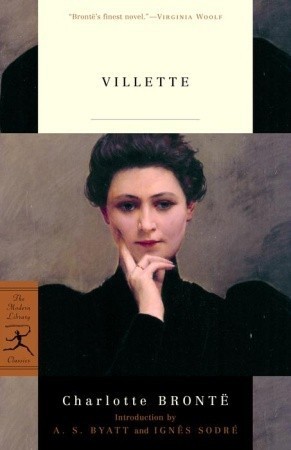
Villette (1853), Charlotte Bronte

I had nothing to lose. Unutterable loathing of a desolate existence past forbade return. If I failed in what I now designed to undertake, who, save myself, would suffer? If I died far away from—home, I was going to say, but I had no home—from England, then, who would weep?

Jane Eyre is one of my very favorite books. As such it has cast a spell over any desire to read Charlotte’s other novels. But I broke that spell with Villette and while it didn’t knock down my favorite it was a wonderful reading experience.

But it is an odd book. The narrative is filled with the supernatural, with sounds and ghosts real and imagined, madness, creepy streets and gardens, a heroine who not only talks to herself but answers back. And it abounds with coincidence, serendipity or the saving grace of Divine Providence, however one might want to call it.

Lucy Snowe is like Jane, an orphan cast off and adrift in the world, although Lucy is a young woman, not a child, when she is forced by circumstances out of her godmother’s care and left to her own devices to find her way. Through a series of the aforementioned coincidences she is saved by acquaintances, old school chums, being in the wrong place at the right time to finally finding love and security.

Snowe is often convinced she will die when yet another position as a companion or as a teacher goes awry. Through inner dialog she is ready to meet her fate with a philosophic resolve. Her many conversations with Reason are quite profound.

Often has Reason turned me out by night, in midwinter, on cold snow, flinging for sustenance the gnawed bone dogs had forsaken: sternly as she vowed her stores held nothing more for me–harshly denied my right to ask better things…Then, looking up, have I seen in the sky a head amidst circling stars, of which the midmost and the brightest lent a ray sympathetic and attent. A spirit, softer and better than Human Reason, has descended with quiet flight to the waste—bringing all round her a sphere of air borrowed of eternal summer, bringing perfume of flowers which cannot fade—fragrance of trees whose fruit is life, bringing breezes pure from a world whose day needs no sun to lighten it.

Lucy fights with Reason and Divine Providence often, each whispering opinions to her weary mind. She has been made mad by them, but they have also healed her.

A little reading about the reception of Villette in Bronte’s time is fascinating. As a reader of this book in the 21st century, I see it as an honest portrait of a woman who has no family—male relatives—to support or protect her, she is like many in Bronte’s time. Snowe’s life is in her own hands to be made of what she can and at times it isn’t pretty. Bronte’s contemporary, Matthew Arnold, had a decidedly bitter experience with the journey of Lucy Snowe, calling the novel, “hideous, undelightful, convulsed, constricted…one of the most utterly disagreeable I have ever read. Her mind contains nothing but hunger, rebellion, and rage. Which the only response can be, “Exactly!” He did not understand that he proved Bronte’s point about women in Lucy Snowe’s situation.

If the novel was only about the Ginevra Fanshawe and Polly Home type, the lovely young girls of status and wealth, that would have made a “pretty novel,” but not a very interesting one. Bronte chose honesty over superficiality giving Lucy Snowe strength, instead of helplessness modeling a heroine that speaks to and gives hope not only to women in Bronte’s time, but to the situation of many women today.

Persuasion (1817), Jane Austen

I didn’t expect to go from Mansfield Park to Persuasion, but it turns out I wasn’t ready to leave the Austen universe. Persuasion was the only book I hadn’t read and it was a pleasure to get to know Anne Elliot and the characters that make up her world.

I found the premise to be fairly simple: girl and boy like each other, but family friend and confidante is opposed and forces their break up. After 8 years there are sparks still. Will they be quenched or ignited?

One of the things I liked about this book is this is set up almost from the beginning so the reader assumes the outcome, but there are enough cogs in the wheel that you are not quite sure. You have to wonder if they DO get there, how will they get there. At least that’s how I approached the story.

At 28, Anne, who has lost her “bloom,” is considered an old maid, even though her older sister Elizabeth is still unmarried, but she’s prettier. That’s a whole thesis right there, but let’s move on. Their younger sister Mary, married with two children, relies on Anne to rescue her from her (psychological?) maladies with a long stay in which Anne meets her brother in law’s parents and his sisters and essentially rescues them from their troubles. Anne is the rock, the stable one, the ‘go to’ for love advice, household problems and how to find a good book. She is neglected by her father, who has lost his fortune and who favors Elizabeth and it is heartbreaking to hear him talk in negative ways about her looks and prospects, sometimes right in front of her. It is telling that both he and her sisters, the people closes to her, take her for granted, yet everyone else in their larger social circle find her indispensable and only see her good qualities. How sadly common for the so-called “old maid.”

We read as Anne catches the interest of two men, besides Captain Wentworth with whom she called things off all those many years ago. And though she was being played by her cousin Mr. Elliot, I was not sure how she was going to find the evidence that all was not right with him. Austen gives us then, Anne’s school friend whom she meets in Bath and is privy to the truth about Mr. Elliot. While I found that revelation scene to be contrived and overly dramatic, the melodrama of the telling was quite enjoyable.

And finally, when that discussion occurs about the fickleness between men and women that makes it impossible for Captain Wentworth to keep quiet about his true feelings for Anne….Not to give away spoilers, but that love letter…oh my.

Anne Elliot as a person is emotionally strong when others give in and handles accidents and disasters with a concerned, but firm hand. She is patient, skillful and can reign in her emotions for the greater good. She is the person, who would quell panic and find the way forward if she were with you lost on a desert island!

Maurice (1971), EM Forster

A devastating, but ultimately satisfying look at the sexual awakening of Maurice Hall. Written early in the 20th century at a time when homosexuality was a criminal offense, Forster chose to delay its publication until after he died. Published in 1971, a year after his death we follow Maurice to Cambridge with the assumption he will then follow in his late father’s footsteps and join the London business he and his partner started. At Cambridge Maurice falls for Clive Durham, a Classics major, but this relationship fails.

However, the realization of what living this life entails, that is, having to love in secret, being a pariah to society and family, the loneliness of perhaps never again finding another man like him fills Maurice with unbearable sadness. He quits university just before graduation and is accepted into the firm by his father’s partner. It is a pivotal time as the fear of a lifetime of loneliness bears down on him and thoughts of suicide plague him. Ultimately, Maurice begins to carve out a life as best he can even with the thoughts of an uncertain future.

There is light, though, and a reason to hang on….

This book made me sad at many points. It speaks of a different time than at present and it is important to grasp what gay men and Lesbians endured who dared to be true to themselves. Forster has a way with subtlety in his character portrayals that I really like. A hard, but important read.

Yes, the heart of his agony would be loneliness….An immense silence, as of death, encircled the young man, and as he was going up to town one morning it struck him that he really was dead….Under these circumstances might he not cease? He began to compare ways and means and would have shot himself but for an unexpected [illness and death of his grandfather].

When he came home and examined the pistol he would never use, he was seized with disgust; when he greeted his mother no unfathomable love for her welled up. He lived on, miserable and misunderstood, as before, and increasingly lonely. One cannot write these words too often: Maurice’s loneliness: it increased.

Dedicated to a Happier Year

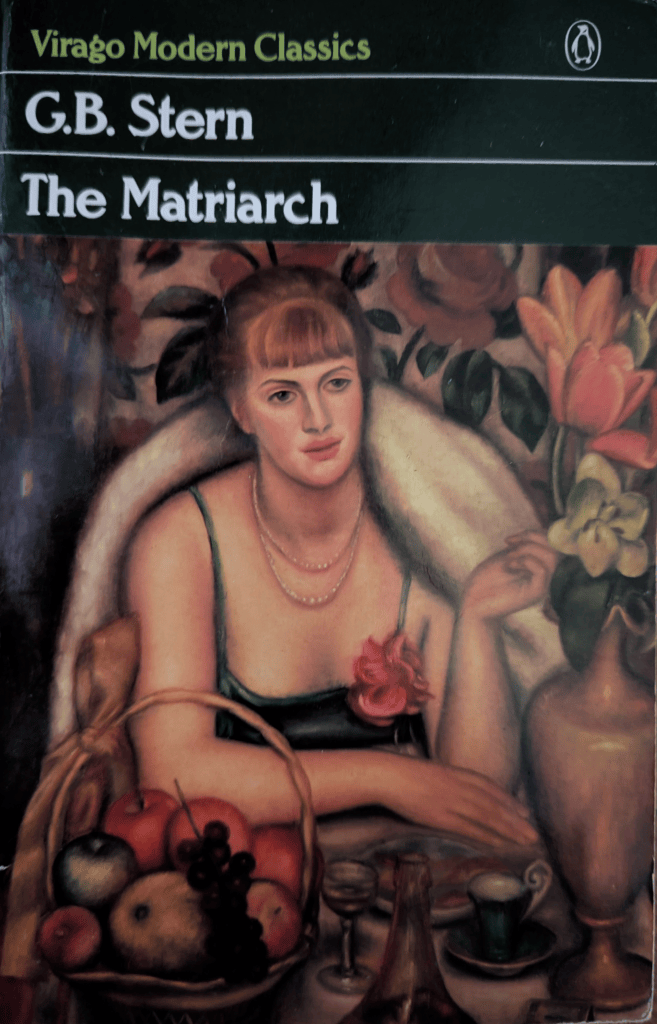
The Matriarch (1924), GB Stern

…In a typical chronicle of the Israelites, it would be taken for granted that the girls did not count at all…if they give birth to a boy who will grow into a man, they have fulfilled their destiny in the only possible way. When you have heard more about the adventure of being a Rakonitz, you will recognize why I have called them the very topsy-turvydom of Jews. It was a family of women bucaneers [sic]. They were thrown forward, and the men receded a very little bit into dependence. 

GB (Gladys Bronwyn) Stern is a “lost lady” of literature: well-known in her time, but little heard of today. She was born in London in 1890 and at the age of 16 traveled with her parents to the continent and studied in Germany and Switzerland. She was a novelist, memoirist, playwright and short story writer; several of her novels were turned into movies. The Matriarch is the first book in the Rakonitz Chronicles, a semi-autobiographical account of the Rakonitz, Bettleheim and Czelovar families, who are well-to-do cosmopolitan Jews with various family members having settled in England, Hungary, Poland, Russia, and Austria.

To say this is a sweeping generational saga of three families gives an idea of the breadth of characters. In fact, there are so many a detailed family tree is provided in the back of the book. However daunting a read this seemed at the beginning-the narrative is constructed in such a way that the generations and their stories are told together rather than in a linear pattern of one generation building upon the last-it works very well. The narrative has the feel of conversations at big family gatherings where the oldest person tells anecdotes about old uncle Saul with the smelly pipe who knew all the important people and who was important himself or beautiful cousin Elizabeth who refused an arranged marriage scandalizing the family when she married for love or the great-granddaughter Toni who decided to work for a living to support her family when her father died.  

The action moves from Vienna to Paris to London to Italy, Russia and to Central and South America, beginning with Simon and Babette Rakonitz who marry in the early 19th century. The wealthy, upper class Rakonitz family are very assimilated, but retain elements of their religion. The story takes in the larger cultures and societies in which they live that make the novel so interesting. They are a well-accepted noteworthy family having made their money in the diamond and other precious gems trade. The women hold the family together, especially after the financial tragedy that robs each household of their husbands, uncles and fathers.

Against the backdrop of tradition that each family member is expected to accept, the younger generations fight for their personal independence against loyalty to the family name. And some try to balance both, making life difficult when cracks appear in the family armor that call for intervention. This is not a somber or dark tale of prejudice or oppression, but a story of a dynamic family that is engaged in living life to the fullest and that through the generations is fully invested in the world around them.

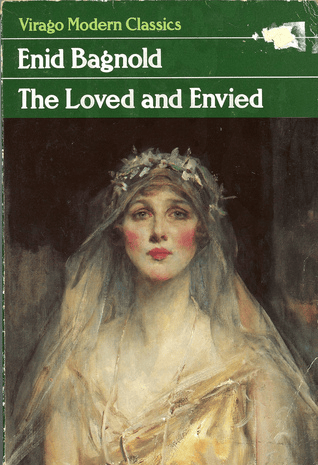
The Loved and Envied (1951), Enid Bagnold

He had come late to the study of himself and now that he was old he was struck that he had thought so little through his life about his reason for living. He had been like a thrown ball, which while it rolls is satisfied, but when at the end of its movement it lay still, wondered what it was doing on the ground.

Once she had said about death, “I’m sure it goes easily. One mustn’t fuss. The important thing is to get reasonably exhausted by life, and avoid this hankering for repetition. What you’ve had you’ve had.”

Enid Bagnold is best known as the author of National Velvet, the beloved novel of a girl and her prize winning horse. In The Loved and Envied, she tackles middle age and the fading class of expat aristocrats: American, Italian, and Scottish living in France in the 1950s. Centering on Lady Ruby Maclean (who is based on the real-life Lady Diana Cooper, a famous socialite of the early 20th century), the various, mostly middle aged characters, come to terms with their lives conscious of missed opportunities, regrets over actions they didn’t take and words they didn’t speak. Love is their biggest disappointment as well as the discovery that having great material assets isn’t enough for a fulfilling life.

Ruby is the “loved and envied” of the title, well aware that throughout her life most people she meets are either in awe of her or in love with her. It is fascinating to watch the interactions of these characters in relation to Ruby and their decades long friendships as they now deal with the life choices they made in their youth. Most are fraying around the edges wrestling with who they were then and what has become of them now. 

For example, Ruby’s husband Sir Gynt a good-hearted, but unsettled man is having a mid-life crisis and wants to move to India. Alberti, Ruby’s oldest friend, has defiantly remained single all of these years, but now that his health is declining decides to marry his long-time care giver, Celestine who has always aspired to marry into a titled family, which Alberti, as Duke of Roccafergolo, solves both their problems. Her friend Cora who gave up painting at marriage is invisible to her husband, a mediocre playwright; she courageously leaves him becoming a world-renowned painter.  In this novel of secrets and words left unsaid couples cheat on their spouses to hold on to their youth or yearn for a romance that will never come.

One of the plot devices Bagnold uses is to take us back in time to the youth of each character showing the circumstances of their life and the options chosen. The settings move from Scotland to Jamaica, to Paris and London as each character takes their starring turn in Ruby’s life.

Though the folly of past decisions is exposed and several characters die, this isn’t a depressing book. It is an insightful commentary on the ways people make peace with their youthful choices when they have not stood the test of time. They all have quirks or are downright eccentric as life deals them blows they can’t always overcome. I was captivated by their perseverance. The most successful of Bagnold’s characters accept the past’s unraveling and are brave enough to change their future. Ruby as the stable constant in all their lives recognizes the ebb and flow of all around her and manages magnificently to keep her poise and good humor. 

I’m haunted with a need to set things straight between me…and my reason for living.

I have never once in my life been in love with someone who loved me. Now I must be resigned to die without it.

There are women, who don’t, by nature, know what’s expected of them. They don’t know what place they ought to fill in men’s regard. I’m like that. You see me old now but it’s always been the same. I’m without what cannot be described to me, what’s not taught, and that to me doesn’t come naturally. And it has ruined my life.

Desperate Remedies (1871), Thomas Hardy

“You speak truly. That we never meet again is the wisest and only proper course. That I regret the past as much as you do yourself, it is hardly necessary for me to say.”

After reading Jude the Obscure with a group on Instagram I decided to join their year-long Thomas Hardy Readalong—one book each month. First up, Desperate Remedies, which we read in January. This is Hardy’s second ‘first” novel, because his first was rejected by his publisher. After getting tips from his reader at the second publisher, the writer George Meredith no less, Hardy wrote Desperate Remedies which was published in 1871.

The novel opens with a love affair that ends in mystery: the woman breaks it off only to disappear leaving the man heartbroken. He does recover and after some years marries and has a daughter whom he names Cytherea. She is left an orphan when her father dies and is forced to find employment as a lady’s maid with the imperious Miss Aldclyffe. Cytherea has fallen in love with an architect in her brother’s firm, but he is engaged to marry his cousin, a match made years ago without any enthusiasm in the present. When Owen, Cytherea’s brother becomes very ill the steward of Miss Aldcyffe’s estate asks her to marry him with the promise to pay for Owen’s medical care. But is Aeneas Manston whom he says he is? What is his past, really? Will Cytherea discover the truth before it is too late?

And does this sound like a melodrama? Well, it is! However, it is not as superficial as it may seem due to Hardy’s way with storytelling and his ability to make every character, even the most minor, full of personality and life. A related technique is the dividing up of the story into time: The Twenty Second of August; The Fifth of January, Before Dawn; September the Twentieth, Three to Four p.m. This effectively brings the reader into the story.

Desperate Remedies is also a mystery. Why is Miss Aldclyffe so enamored of Cytherea, hiring her knowing she has no experience as a lady’s maid and then the next minute trying to force her into a marriage with a man she doesn’t love? Why do several characters have the same name? Does a certain man have two or three wives? Did a fire at an inn kill or not kill someone? This twisty-turny narrative works so well because many of the characters are interconnected. The book also has a Gothic romance feel combined with qualities of Victorian detective fiction.

I found this book highly entertaining and quite a page-turner. I am in the middle of February’s book, A Pair of Blue Eyes and I have to say, I am looking forward to what the rest of the year will show me about Hardy. At the moment, I feel I am being set up for a very good “Thomas Hardy Year.”

It was about four o’clock in the morning when Cytherea, though most probably dreaming, seemed to awake–and instantly was transfixed by a sort of spell, that had in it more of awe than of affright. At the foot of her bed, looking her in the face with an expression of entreaty beyond the power of words to portray, was the form of Miss Aldclyffe—wan and distinct. No motion was perceptible in her; but longing—earnest longing—was written in every feature.

They pondered on numerous schemes by which a young lady might be supposed to earn a decent livelihood—more or less convenient and feasible in imagination, but relinquished them all until advertising had been once more tried, this time taking lower ground. Cytherea was vexed at her temerity in having represented to the world that so inexperienced a being as herself was a qualified governess; and had a fancy that this presumption of hers might be one reason why no ladies applied.

Daniel Deronda (1876), George Eliot

“But now look up the river,” said Mordecai, “See the sky, how it is slowly fading. I have always loved this bridge: I stood on it when I was a little boy. It s a meeting-place for the spiritual messengers. It is true—what the Masters said—that each order of things has its angel…Here I have listened to the messages of earth and sky; when I was stronger I used to stay and watch for the stars in the deep heavens. But this time just about sunset was always what I loved best. It has sunk into me and dwelt with me…it was my own decline:…it waited till at last it brought me my new life—my new self—who will live when this breath is all breathed out.” 

I found this to be an important book for two reasons. Firstly, there are an incredible amount of characters, both main and secondary. Daniel Deronda and Gwendolen Harleth both feature at the top, but so do their families and friends, including the Jewish Polish refugee Mirah, her ‘sisters,’ her brother and dear Uncle Hugo. Eliot manages to tell all of their stories without the reader getting confused, because their lives are intertwined and in the grand scheme of the novel, all feed off of and move due to one another.

The second reason I find this book important is because of Daniel and his personal journey that ends in the discovery that he is Jewish. Classic literature is rife with anti-Jewish sentiment and the stereotypes are disappointing. However, I am a very firm believer that context is everything (in this case, that the time period must be taken into consideration) and I can still, for example, enjoy Edith Wharton’s novels despite some nasty anti-semitic barbs. So the positive portrayal Eliot describes of Judaism and the London Jewish community Daniel encounters is surprisingly refreshing.

When the story opens we are introduced Gwendolen Harleth and Daniel Deronda who have a chance encounter at a gaming table in the fictional town of Leubronn, Germany. She is winning easily at roulette until the gaze of this stranger unnerves her causing loss after loss. The next day she receives a letter from her mother telling her the family is in financial ruin and she must come home immediately. Without money Gwendolen is forced to pawn a necklace to buy a ticket home. The next day the necklace is mysteriously returned. Daniel, who saw her go in to the pawn shop, paid it off. The story is next told in split flashbacks alternating between the two.

With Gwendolen’s stepfather dead and her mother and sisters without funds her aunt and brother in law finance a very modest home for them, but it doesn’t include their upkeep. Gwendolen is fiercely independent having vowed never to marry, but with no immediate prospects she feels obligated to find some means to support what is left of her family. She is horrified when offered a governess position and frantically makes other plans hoping she can develop her voice into a singing career; when she is heard by a professional musician she is dismayed to learn she has no talent. Just when she comes to terms her life as a governess, she meets Henleigh Mallinger Grandcourt a charming, but rather harsh, calculating man.

There has always been an undercurrent of attraction between Daniel and Gwendolen, but when he became involved in discovering his biological family she was in no position to wait. But then Gwendolyn discovers Grandcourt had a mistress, Lydia Glasher, who he is still supporting along with their several children. Shocked, she runs away to her friends in Germany, though soon realizing her independence is fruitless. She returns and concedes to marry Grandcourt with the assurance he will take care of her mother and sisters and hoping she can manipulate him with her her beauty and wit, believing she is to him a prize he won and that will be enough.

It is devastating for Gwendolen when she realizes Grandcourt will forever treat her abominably, knowing she knows about his past and finding ways to throw it in her face. She tries to be brave in this marriage for her mother’s sake, but her life is miserable. However, the resolution for this misery is quite shocking.

Daniel has been raised by his Uncle Hugo, in a kind and comfortable household, but Hugo has always refused to discuss Daniel’s biological parents. Daniel is curious, but has never pushed Hugo to reveal. In what will become a turn of the utmost in his fate, Daniel befriends Mordecai, a Jewish mystic, who sees in Daniel a kindred spirit and spiritual brother who feels Daniel’s Jewishness before he knows it himself. Daniel attends synagogue services, spends Shabbat dinners with Mordecai’s friends, the Cohen family and feels very attracted to their Jewish life. As Daniel is drawn deeper into this community he is keen to study Jewish theology, history and even Kabbalah.

Myles Birket Foster’s Kew Bridge from Strand on the Green

Into the mix comes Mirah Lapidoth. a young Jewish woman, who arrives in London from Poland, after escaping her abusive father. He has always insisted her mother and brother were dead, but she has never believed him. She is penniless and in the futility of the search and her loneliness she attempts to take her life by jumping in to the Thames. She is rescued by Daniel who happens to be rowing past at that exact moment. He takes her to his friends Mrs. Meyrick and her three daughters, who treat her like a part of the family, where she begins to heal her body and spirit. Her Jewishness is acknowledged and though Mrs. Meyrick hopes she will become a Christian it is without deprecation, because Mirah herself could never let that go.

One of the key moments for Daniel is the revelation of his biological parents. Sir Hugo arranges a meeting with his mother and he learns the reasons she abandoned him; that the expectations her strict Jewish father placed on her were impossible for her to fulfill. A free spirit chomping at the bit of marriage, she chose freedom when her husband died, giving up her son to her close friend. The legacy of Daniel’s grandfather is also a discovery that changes his world.

Out of so much tragedy for so many characters, there are happy endings and promises of self-realization for everyone. And I have to say after staying with this bunch for over 700 pages that is fine with me!

Thoughts on the Judaism of this Book

As I said at the beginning, Eliot paints one of the most knowledgeable and sympathetic portraits of Jewish life I have ever read in a classic novel. Of course, I am only speaking to my experience and not “the Jewish question” in classic literature in general. For example, Mordecai’s knowledge of Jewish history and its mystic elements and the sympathetic and detailed life of the Cohen family and the Jewish community of which they are involved is so specific, it made me wonder at Eliot’s preparation for writing the novel.

And that made me remember a book I picked up long ago on George Henry Lewes, Eliot’s romantic partner. George Henry Lewes and George Eliot: A Review of Records, by Anna Theresa Kitchel (1933) is a narrative collection of Lewes diaries, letters and other documents that contains numerous references to George Eliot and her books.

Kitchel uses Lewes’s diary entries during the summer of 1873 on a trip to Germany to describe collecting “data” with Eliot when Daniel Deronda was still in the development stage.

July 28th : Strasbourg. Bought book on Jewish subjects for Polly’s novel.

July 31st: Bought books.

August 15th: Left for Mainz—found synagogue and hour of service.

August 16th: To synagogue—rarity of Jewish type.

It is fascinating for me to read the research methods of authors and in this case, instructive to see how ‘hands on’ Eliot regarded her experience for a factual representation of Judaism and the Jewish community.

I am a Jew….And it’s not only that I am a Jew, but I come of a strain that has ardently maintained the fellowship of our race—a line of Spanish Jews….My grandfather preserved manuscripts, family records stretching far back, in the hope that they would pass into the hands of his grandson. And now his hope is fulfilled, in spite of attempts to thwart it by hiding my parentage from me.

Do not think of me sorrowfully on your wedding-day. I have remembered your words—that I may live to be one of the best of women, who make others glad that they were born. I do not yet see how that can be, but you know better than I. If it ever comes true, it will be because you helped me. I only thought of myself, and I made you grieve….You must not grieve any more for me….it shall be better with me because I have known you. Gwendolen Grandcourt 

Jude the Obscure (1895), Thomas Hardy

He sounded the clacker till his arm ached, and at length his heart grew sympathetic with the birds’ thwarted desires. They seemed, like himself, to be living in a world which did not want them…They took upon them more and more the aspect of gentle friends and pensioners—the only friends he could claim as being the least degree interested in him, for his aunt had often told him that she was not. “Poor little dears! You shall have some dinner—Eat, then, my dear little birdies, and make a good meal.” A magic thread of fellow-feeling united his own life with theirs. Puny and sorry as those lives were, they much resembled his own. 

Jude Hawley is a heart-breaking character. As the titular protagonist he has been trying to fulfill a dream since his youth, but is thwarted at every turn by a personal moral code that forces him to do the right thing while watching his dream fade until its fulfillment is impossible. That this is also a novel about love and living out an unconventional relationship, it incurred such nasty criticism against Hardy, he abandoned fiction writing after his next novel, The Well-Beloved.

When the novel opens we meet young Jude who has just been left with an elderly aunt, because his parents have given him up. She does not hide her disdain at having to take him in. The pain of feeling unwanted will affect Jude for the rest of his life as he extends the sensitivity to his own pain to that of others forcing him into decisions that will ruin the onward focus of his life. Even now, at the beginning of his life, this sensitivity expands to the animal kingdom, in this case the birds he is tasked with “clackering” out of a farmer’s fields so they don’t eat his grain. Feeling their hunger he lets them eat and upon discovery is severely beaten.

Walking one day he goes on the top of a roof and notices the lights of a city in the distance. A mystical vision takes hold of him.

He had heard that breezes traveled at the rate of ten miles per hour, and the fact now came into his mind. He parted his lips as he faced the north-east, and drew in the wind as if it were a sweet liquor,“You,” he said, addressing the breeze caressingly, “were in Christminster city between one and two hours ago, floating along the streets, pulling round the weather-cocks,…and now you are here, breathed by me—you, the very same. 

Suddenly there came along this wind something towards him—a message from the place—from some soul residing there, it seemed. Surely it was the sound of bells, the voice of the city, faint and musical, calling to him, “We are happy here!” 

Christminster becomes the goal out of his miserable life as a chance meeting with a stranger tells him what the university town has to offer. Jude decides to study theology and begins a years-long study. For the rest of his childhood and throughout adolescence and young adulthood, he spends hours in the evenings laboring through Greek, Latin and the Church Fathers.

Jude grows into a decent, but naive young man, who is taken advantage of by women for whom marriage is the only endgame in this rural town. First, is Arabella, who raises and slaughters pigs and fakes a pregnancy thereby forcing his better nature into marrying her. Even after she tells him there is no child he continues in the relationship foregoing his studies to concentrate on the marriage, but there is no love here and Arabella leaves him without divorcing him, which will cause problems later.

Jude has been told of a cousin, Sue, living in the vicinity and when he discovers her, though he doesn’t speak to her at first, falls in love. Once he reveals himself he finds her views on marriage and relationships very out of the ordinary. She does not want to marry, wanting instead to live with him as a married couple. However, she succumbs to the stability offered by an older, professionally stable man leaving Jude heartbroken.

Jude’s life becomes more and more complicated and his dreams of studying at Christminster fade as Sue leaves her husband and goes back to Jude where the years pass and three children are born. Then Arabella resurfaces asking Jude to take her young son so she can go back to work. Jude takes on all these responsibilities willingly, but there is finally the realization that all his studying is for naught; life throws cogs into his every wheel and the vision of a life in Christminster will never become a reality.

There is no way to brighten up this picture and the ending is most pathetic and sad. However, this novel portrays a good man, whose moral code is based on kindness and sensitivity no matter how cruel the manipulation and lies of others. One of the best books I read last year, though it was painful, I highly recommend this journey with Jude.

A note on Jude and Sue’s relationship—living together as husband and wife, but not actually married—was so controversial at the time that the criticism Hardy received ended his novel-writing career. In fact, the criticism came to the US even before the book was published here, emphasizing disgust at the relationship, instead of recognizing the major ark of Jude’s story as a moral man of failed dreams. The book was even burned by a few bishops. Jude the Obscure gradually found sympathetic readers, but the damage was done and Hardy soon turned full time to writing poetry, for which he is also well-known.

After Sue leaves her husband, he says to a friend,

“Yes….I would have died for her; but I wouldn’t be cruel to her in the name of the law. She is, as I understand, going to join her lover. What they are going to do I cannot say. Whatever it may be she has my full consent to.” Says the friend, “Some men would have stopped at an agreement to separate.”

I’ve gone into all that, and don’t wish to argue it. I was, and am, the most old-fashioned man in the world on the question of marriage—in fact I had never thought critically about its ethics at all. But certain facts stared me in the face, and I couldn’t go against them.” 

Sue on marriage:

Fewer women like marriage than you suppose, only they enter into it for the dignity it is assumed to confer, and the social advantages it gains them sometimes—a dignity and an advantage that I am quite willing to do without. 

…I feel just the same about it now as I have done all along. I have the same dread lest an iron contract should extinguish your tenderness for me, and mine for you, as it did between our unfortunate parents…I think I should begin to be afraid of you, Jude, the moment you had contracted to cherish me under a Government stamp, and I was licensed to be loved on the premises by you—Ugh, how horrible and sordid! Although, as you are, free, I trust you more than any other man in the world. 

Murder on the Orient Express (1934), Agatha Christie

Neatly folded on the top of the case was a thin scarlet silk kimono embroidered with dragons.

“So,” he murmured. “It is like that. A defiance. Very well. I take it up.” 

This is my first Agatha Christie and my introduction to the famous Belgian detective, Hercule Poirot. As a novice Christie reader and one who doesn’t read crime fiction all I can say is…the ending! Was it obvious to more seasoned readers? It took me by surprise even after it was revealed the passengers knew each other and the further revelation they were connected due to a celebrated murder case in the States. Such is my inability to ever figure out, “whodunit.” 

The story takes place aboard the luxury train Orient Express which is departing Istanbul, destination London. In the first class section we are introduced to an international cast of people whose actions, glances, presence seem suspicious or at least that’s the perspective of M. Poirot, the famed international detective, that oddly from my perspective, a name everyone seems to know. Once the murder is committed he looks at everyone as a subject. Is this a trait of his profession or is it because everyone IS a suspect? Most of the passengers pertinent to the story are stereotypes of culture and country including, a loud wealthy American woman, the prim and proper female missionary, an English governess, a Russian princess and her devoted maid, a suspicious Italian, a count and countess and a private investigator. Among the other passengers is the murdered man’s secretary and translator, and his valet.

When the passengers awake on the first morning of the journey, they find the train is not moving having come to a standstill in the middle of the night due to do a snowstorm. Coincidentally, it is discovered one of the passengers has been murdered, American tycoon Samuel Ratchett. He had come to Poirot the night before asking him to investigate the threatening letters he’d been receiving, but Poirot refused the case. Now, he’s declared himself in charge of Ratchett’s murder investigation. Examining the victim’s body he finds 12 stab wounds and looking through his cabin among other evidence he sees the window is open, a pipe cleaner and a fragment of a handkerchief are on the floor as well as a bit of burned paper with the name ‘Armstrong’ still visible. A detail to come later is the brief sighting of a woman in a scarlet kimono flitting down a corridor that some of the passengers noticed…or did they, though no one saw the face?

As the suspects are interviewed, Poirot weighs and measures their alibis that seem plausible and honest, until he finally pieces together how each is connected to one another and to the murdered man…..

This is basically a police procedural and it was interesting to see the French detective’s investigative skills. But to be honest, I had some trouble keeping the many characters’ accounts straight and was certain this would prevent my understanding the outcome. But the process of Poirot’s deductive methods drew me as did the variety of characters and their stories that kept the narrative moving. I read on anxious to find out the killer. And boy, I did not see that coming!

Frankenstein (1818), Mary Shelley

Perhaps a corpse would be re-animated;…perhaps the component parts of a creature might be manufactured, brought together, and endued with vital warmth.”

Mary Shelley

“Alas! I had turned loose into the world a depraved wretch, whose delight was in carnage and misery…”

Victor Frankenstein

The catalyst for Frankenstein Mary Shelley explains, is that she and her husband Percy were visiting the home of Lord Byron one dark and stormy night, when Byron laid down the challenge that each must tell a ghost story. Byron and Percy were able to create a story on the spot, but it took Mary a few days. In fact, she dreamed it. The result is one of the world’s most well-known classic tales of necromancy and Gothic story-telling.

As often happens when I read a classic novel that has seen countless film adaptations, I was very surprised that the book tackles far more than just the ‘monster parts.’  Shelley proposes thoughtful and deep topics and asks questions about personal responsibility, the quest for life’s purpose and leaves me wondering whether a monster has a soul?

Frankenstein is told as a story within a story by Robert Walton who is at sea and is corresponding with his sister, Margaret. But when the ship gets stuck in the ice floes of the Arctic, in the span of a few hours two very odd things happen. First, the crew spots a huge human-like creature driving a sledge with a pack of dogs passing at a distance. The next morning, they find another man, but more normal-looking, who is also driving a sledge, floating near them on the ice. He is near dead. The crew rescues him, revives him and while recuperating tells Walton how he came to be floundering on an ice floe in the middle of the Arctic. Walton records the tale for his sister in a journal. Frankenstein is the story of Victor Frankenstein, youthful scientist and budding necromancer whose interest in natural philosophy takes a turn from the traditional path of changing lead into gold to the perilous route toward creating life from death.

At university, Victor studies physiology, anatomy, the life process and the progression of death; he visits charnel houses and sees how the body corrupts and wastes away after the bloom of life.

After days and nights of incredible labour and fatigue, I succeeded in discovering the cause of generation and life; nay, more, I became myself capable of bestowing animation upon lifeless matter….It was already one in the morning….I saw the dull yellow eye of the creature open; it breathed hard, and a convulsive motion agitated its limbs.

After two years of working toward this goal of animating life from death Frankenstein succeeds. But instead of celebrating the work, he is horrified. He has created a creature, a monster. He cannot sleep for the nightmares that consume his waking and sleeping hours and falls into a many-month illness. From the very beginning that sparked the life of the monster, Victor is unable to accept responsibility for what he has created or the repercussions of the monster’s actions. This weakness in character will hound him for the rest of this life.

Meanwhile, the monster flees the town. He is a fully formed human-like man and as he roams the countryside coming into contact with people he not only sees, but feels their fear and disgust. He shows up near Victor’s home and kills his younger brother. Victor is still at university when he hears William has been murdered; he knows it is the monster. Unable to confess to the authorities what he knows for fear of being branded insane, he keeps quiet. An investigation and trial is held for the murder and through circumstantial evidence Justine, a trusted family servant of the Frankensteins is convicted of the crime and hanged. “The first hapless victims of my unhallowed arts.”

The monster is desperate for a place of refuge and finds it in an abandoned hovel near a cottage. The cottage is occupied by a brother, sister and their father. Through watching the interactions of the siblings as they care for their blind father he learns how they take care of one another, how they speak in kindness toward each other and what it means to be part of a family. Aware of his physical deformities he knows to keep out of sight, but he takes a chance on the father when the children are away during the day and forms a friendship with him. But the day comes when the children see him and the family flees the cottage. Brokenhearted, the monster understands his kindness or concern for others will always be outweighed by his physical appearance. There is no place on earth for him.

Where were my friends and relations? No father had watched my infant days, no mother had blessed me with smiles and caresses;…From my earliest remembrance I had been as I then was in height and proportion. I had never yet seen a being resembling me, or who claimed any intercourse with me. What was I?

The monster finally confronts Frankenstein and describes his life, how he came to speak, to think, to understand society by watching this family. And now, by bitter experience he will never be able to live as they do, in a family or as a common man.

Remember, that I am thy creature; I ought to be thy Adam; but I am rather the fallen angel, whom thou drivest from joy for no misdeed. Every where I see bliss, from which I alone am irrevocably  excluded. I was benevolent and good; misery made me a fiend. Make me happy, and I shall again be virtuous.

He pleads with Frankenstein to make him a companion like himself, so he can live as he sees others doing.

You must create a female for me, with whom I can live in the interchange of those sympathies necessary for my being….I now indulge in dreams of bliss that cannot be realized

What I ask of you is reasonable and moderate; I demand a creature of another sex, but as hideous as myself….we shall be monsters…Our lives will not be happy, but they will be harmless, and free from the misery I now feel.

The monster compels Frankenstein to this task and promises to live in secret, perpetrating no violence to any animal and away from any human contact.

Victor Frankenstein indeed created a monster, but what is amazing about this one is his heart, soul and intelligence. He has the potential to be every bit as kind and compassionate, moral and honest as any other man, yet he will never be accepted because of his physical appearance. No matter his good works or heroic deeds, his physical presentation will always negate his integrity.

My Thoughts

Victor Frankenstein turns his back on what he created. He abandons him on the first night, but once he hears his story, it is obvious this is a feeling, thinking human-type being, deserving of assistance, mercy and companionship. Would someone who created life really reject it like he did? The monster may be hideous to look at, but inside he is made like any other human being with the full capacity of feelings and outlook on life.

Would you reject a “nonperfect” child and would you expect it to fend for itself? Or is this something entirely different? Because the monster is not a helpless baby, but came into the world fully formed, who learned to speak, to cultivate his intelligence, to live in the world through observation, because he was made with wisdom already intact. Does he have a soul? He acts like it. He quickly becomes Victor’s intellectual equal. And Victor is given ample opportunity to make things right for him, instead he gives into fear.

Hounded for years by the being he created, Victor dies on the ship still unrepentant and without accepting any responsibility toward the monster; even as he lay dying he just wants the wretch dead.

The fate of the monster is sealed at Frankenstein’s death. Walton hears noises coming from the room where Frankenstein has died. He sees that it is the monster lamenting his existence that there will now never be redress against the man who created him.

Frankenstein forced him to a life of misery and neglect and now he will end his own on a “funeral pile triumphantly, and exult in the agony of the torturing flames….my ashes will be swept into the sea by the winds. My spirit will sleep in peace….”

Shelley goes through such pains to tell the monster’s story and she imbues the creature with humanity and sympathy as with any other human being. She shows his compassion, his intelligence; he is creative, hard-working and capable of contributing positively to society. He develops the full capacity of feelings, agency and responsibility for others and this is to me the tragedy of Frankenstein and his monster.

Because the monster is a victim. And it is easy to interpret Frankenstein as a warning for these modern times as science advances toward cloning and other forms of creating genetically modified life. Can we use Frankenstein as a forewarning to illustrate imagination gone wrong, to get us to think about the results of such experimentation and to ask how and what we are responsible for when we take these steps? Is creation and human life about outward appearances as we go about creating perfect people? What do we owe to them when they turn out to be not so perfect?

Once I falsely hoped to meet with beings, who, pardoning my outward form, would love me for the excellent qualities which I was capable of unfolding. I was nourished with high thoughts of honour and devotion….When I run over the frightful catalogue of my sins, I cannot believe that I am the same creature whose thoughts were once filled with sublime and transcendent visions of the beauty and the majesty of goodness. But it is even so; the fallen angel becomes a malignant devil. Yet even that enemy of God and man had friends and associates in his desolation; I am alone.