Rebecca (1938), Daphne du Maurier

Unconsciously I shivered, as though someone had opened the door behind me, and let a draught
into the room. I was sitting in Rebecca’s chair, I was leaning against
Rebecca’s cushion, and the dog had come to me and laid his head upon my knee
because that had been his custom, and he remembered, in the past, she had given
sugar to him there.


When I started book blogging, I discovered how many readers include Rebecca on their top 10 favorites list. That in itself was intriguing, yet there were so many other classics I knew about that I wanted to read first.

Now I am initiated. Now I understand.

(Caveat: For those not initiated, you will see often in this post ‘the second Mrs. de Winter,’ this is because her name is never mentioned).

There is so much tension built into this book, which begins in the first pages where an unnamed narrator is recounting a dream. It is a beautiful descriptive dream of a house, its grounds and its secrets and an ominous statement that it is no more.

The house was a sepulchre, our fear and suffering lay buried in the ruins. There would be no resurrection.

When the young second Mrs. de Winter comes to Manderley, her background has not prepared her to take up the responsibilities of caring for a show place like Manderley. Her shyness and reticence in the presence of the household staff and housekeeper Mrs. Danvers, does not instill confidence and she is constantly questioning herself and her marriage to Maxim. In her mind she concocts rich fantasies about what the staff really thinks of her, although reality is never as bad as her thoughts. But there is another facet of this experience she has no control over. She is living with the ghost of the first Mrs. de Winter, Rebecca and her secrets, that permeate every aspect of the second Mrs. de Winter’s life.

No one will talk about Rebecca, which only adds to the second Mrs. de Winter’s rich fantasy life. Though many characters are introduced including Beatrice, Maxim’s sister and kind-hearted Frank Crawley, Maxim’s business associate, who genuinely like and accept her their refusal to talk about Rebecca and her death hangs over Mrs. de Winter’s ability to feel comfortable in the house.

That is until Mrs. Danvers, who it turns out was not just the housekeeper, but Rebecca’s confidante confronts Mrs. de Winter when she catches her in Rebecca’s suite and is only too happy to talk. Danvers is the classic dead mistress-obsessed housekeeper who refuses to let go of the past. She cleans and dusts this suite every day. She lays out Rebecca’s clothes as if she is only gone for the day. du Maurier writes this scene so well. It is easy to share de Winter’s panic as Danvers speaks.

It’s not only this room it’s in many rooms in the house…I feel her everywhere. You do too, don’t you?”…Sometimes, when I walk along the corridor here, I fancy I hear her just behind me. That quick light footstep. I could not mistake it anywhere. And in the minstrels’ gallery above the hall. I’ve seen her leaning there, in the evenings in the old days, looking down at the hall below and calling to the dogs. I can fancy her there now from time to time. It’s almost as though I catch the sound of her dress sweeping the stairs as she comes down to dinner.” She pauses. She went on looking at me, watching my eyes. “Do you think she can see us, talking to one another now? Do you think the dead come back and watch the living?”

I swallowed. I dug my nails into my hands.

Sometimes I wonder,” she whispered. “Sometimes I wonder if she comes back here to Manderley and watches you and Mr. de Winter together.”

When a ship capsizes in the bay and Rebecca’s small boat is discovered with her dead body still inside Maxim has no choice but to reveal the truth about how she died. It is a shocking revelation, but in my opinion, less shocking than the reasons he did it. As she listens to the truth about their marriage, as she hears the details about who Rebecca really was and as the investigation and inquest unfold, she is transformed. She is determined to support her husband, will hear all he is accused of, will stay by his side. In this regard she grows up and is changed overnight. Even Maxim acknowledges her transformation, dismayed that it is his fault.

But you. I can’t forget what it has done to you. I was looking at you, thinking of nothing else all through lunch. It’s gone forever, that funny, young, lost look that I loved. It won’t come back again. I killed that too, when I told you about Rebecca. It’s gone, in twenty-four hours. You are so much older…

And then he says her name. He doesn’t, of course, but in my head it would have made so much sense for him to say it here.

Du Maurier’s writing style is quite amazing in this book. How many passages are worth quoting her way with words? How detailed she gives to the narrative whether in describing a person, Manderley and its grounds, or an event, but the narrative never feels bogged down in the details.

Yet, it is the details that infuse, propel and wrap up the story. I spent the last quarter of the book on a roller coaster as one revelation proves Maxim’s guilt while another one covers it up, while still another could go either way. I have never been very good at guessing outcomes in books, so I was not prepared for the very end. While it explains the dream of the first few pages and why the narrator is estranged from her home, I was still shocked. With eyes as big as saucers I closed the book…“What???”

I have heard people say and I have said it too about books that really touched me; I wish I could forget I read this book so I can read it again for the first time.
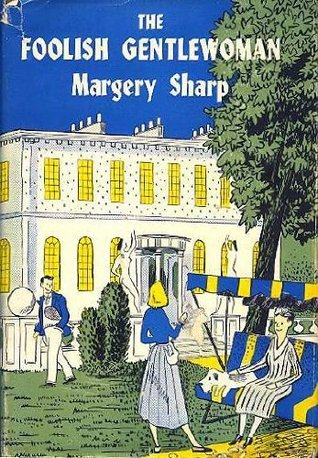
The Foolish Gentlewoman (1948), Margery Sharp

For a moment he was left suspended between past and present, and well he knew which way his heart yearned. What he longed to return to was an orderly world. No one, in Mr. Brocken’s opinion, had tasted the sweetness of life who had not lived before 1914. What years those were for solid comfort!

Recently widowed, fifty-five year old Isabel Massey Brocken has come back to her childhood home, Chipping Lodge. Nearby is the war-damaged remains of the much larger, Chipping Priory, where the Brocken family lived with their two sons, Simon and Mark. Ruth, Isabel’s sister, married and moved to New Zealand, while Isabel eventually married Mark. They had a long happy marriage and though childless, Isabel is close to Ruth’s son Humphrey who was educated in England, served in the war and is now staying with Isabel. Simon is also staying at Chipping Lodge while his war-damaged home is renovated. Completing this collection of family members and employees is Jacqueline Brown Isabel’s companion and Mrs. Poole and her 14-year old daughter, Greta, who Simon hired on as caretakers and cooks.

Humphrey and Jacky have struck up a relationship and value the peacefulness of Chipping Lodge after the chaos and stress of the war. As does Simon who hopes he can get through the next several months with his sister-in-law and the rest of the occupants of the house in peace and quiet. The Poole mother and daughter only want to do their jobs and be left alone. Order and respect permeate Chipping Lodge, though Sharp’s writing suggests a sense of unease.

We soon find Isabel holds a secret that will disrupt the balance of power at Chipping Lodge, a secret she has harbored since girlhood concerning a great wrong she committed against her cousin, Tilly Cuff. She has invited Miss Cuff to visit indefinitely and plans to make whatever amends she can. Simon remembers Tilly, but does not remember a special affection between her and Isabel and fears the disruption of a new person, a feeling shared by Humphrey. Both men have also observed that Isabel seems distracted and under some strain; a normally a patient woman, her temper has become thin and her tongue sharp.

When Isabel finally unburdens herself and what she hopes to do about it Simon and Humphrey are shocked and angry: Isabel wants to give all her money to Tilly out of guilt because of a childish misdeed she believes changed her life for the worse and deprived her of a home and family. It wasn’t until but a few weeks before that a half-heard phrase at church woke this guilt and the remedy to assuage it. She tells Simon what the preacher said,

It was a common error to suppose that the passage of time made a base action any less bad. “He meant, don’t you see, that because a thing happened a long time ago, it doesn’t make it any less base if it was base at the time.”

The sleeping guilt of the act has risen up inside her so that her only remedy is to confess to Tilly the deed and to give her all of her inheritance, including the house, which would go to Humphrey if she didn’t want it.

Once Tilly arrives, however, her abrasive and dictatorial behavior sets everyone on edge. Isabel promises Simon she won’t tell Tilly of her plans until she settles in, but even she sees how loathsome and impossible to bear Tilly has become. Simon tries to talk her out of her plans and though Isabel is aware of her disruption and admits she is very unlikable, that is still no reason to withhold what should come to her.

As time goes by, Tilly has encroached and wrestled her way into the personal and professional life of every person at Chipping Lodge and all is chaos and bad feelings. The Pooles have given notice, Jacky and Humphrey have separated, Simon stays late at the office and leaves early and Isabel has retreated into her own mind.

Something must give before all is lost, so Isabel plucks up the courage and tells Tilly that on the morning after one of their teenage parties, a certain Mr. Macgregor who was interested her wrote her a letter offering marriage. Isabel found it, read it and kept it from her, because she was in love with him herself. She knows this selfish act deprived Tilly of a future of happiness and security that she could never get back. But Isabel could make her future better by offering her money and a home.

It took Tilly three days to emerge from her bedroom and when she does she stuns them all by refusing Isabel’s offer. What she wants instead is for Isabel to keep everything and to give the house to Humphrey; she only wants a life with Isabel. Together they would live out their days in Bath, which Isabel loves, or anywhere else. After all of her years in service, where she went from one job to the next she only wants the stability of friendship and the security of a place to live in her old age. What Tilly is proposing surprises Isabel, since she expected, and was frankly looking forward to, a little suffering as penance. She questions Tilly until she is satisfied that Tilly’s need for stability is the best gift she can give her at this time in her life.

Jacky and Humphrey are horrified for Isabel, until a childhood friend of hers spells it out for them,

Isabel and Tilly have lived their lives for better or worse, “They’ll do very well together, and when Tilly upsets people, Isabel will calm them; and if Isabel is sick, Tilly will nurse her–and of course Isabel will nurse Tilly. I shouldn’t be surprised if they grew to be a very devoted pair.”

As Jacky, Humphrey, Isabel and Tilly make their separate ways out of the house, Simon is left with the Pooles, who continue to do their jobs quietly and unobtrusively. Simon is left with the ghosts of his past until Humphrey, if ever, returns and “could look forward to a period of perfect peace.”

One of my favorite aspects of this book is the setting. Almost every scene takes place in one location, Chipping Lodge. The characters develop, interact with each other, rant and rave and come to terms with their fate all in the same place. The character journey is really the thing here and it’s as if they are forced to face themselves in a locked room until they each find a way out.

This was a satisfying read and one that does make one question wrongs done in the past and how or should they be rectified. To bring up old wounds or not when starting anew might be a better step? While Tilly claims she was not in love with Macgregor, which satisfies Simon, Isabel knows a marriage proposal from anyone decent would have been better in her situation than the life she was eventually forced into.

I am happy to have been introduced to this author and look forward to reading more about her today.

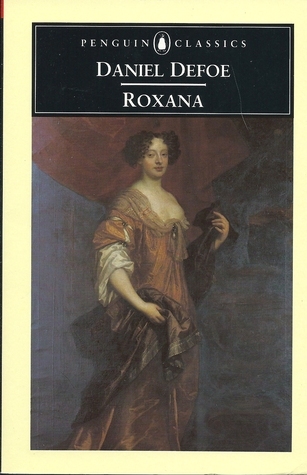
Roxana (1724) Daniel Defoe

If you have any Regard to your future Happiness; any View of living comfortably with a Husband; any Hope of preserving your Fortunes, or restoring them after any Disaster; Never, Ladies, marry a Fool; any Husband rather than a Fool…

So begins Roxana’s life of woe, written as a cautionary tale “to my Fellow-creatures, the Young Ladies of this country,” that any life is better than marriage with a Fool “nay be any thing, be even an Old Maid, the worst of Nature’s Curses, rather than take up with a Fool.”

Because, the Fool she marries and has 5 children by him, suffers through her brother’s financial folly and thereby hers when he is given her portion of their father’s inheritance which he spends and then the folly of her husband’s financial losses. To add to this latest injury, her husband leaves her and their five children to find his fortune elsewhere, with no provision for food, bills or a roof over their head.

Though he has threatened to leave in the past, Roxana never believed he would do it and expects to hear from him or to at least receive something for her livelihood, but as the weeks and months drag on there is no word from him and she begins selling furniture, clothing and jewelry to feed the household. As the situation deteriorates, she knows she must give up her children and hopes the sister of her husband will oblige, so she sends her devoted maid Amy, who has been working without wages, to take the children to their aunt.

The landlord, who has given Roxana a year’s free rent to sort out her situation, begins to insinuate himself in her financial affairs with food and other necessities, which Roxana believes are without strings. However, it becomes clear that if Roxana is interested in staying in the house, he will want to share it with her, cohabit, as if they are a married couple. This is the predicament Roxana will find herself in throughout her life as no word from her husband either for a divorce or by a death certificate will allow her to legally marry. She will be forced to survive in cohabitation, as a mistress, a concubine, a whore.

After the landlord dies, she continues in this manner with successive men, in various situations, acknowledging she is at least lucky that her beauty can still attract rich men, even after so many children and the wear and tear of the guilt she suffers over the choices she has had to make since her husband left. She is given beautiful clothes, jewelry and homes to live in and money to keep up her lifestyle. One of her greatest fears as the years pass in this way, is over the control of this fortune, which she would have to give up if ever she could legally marry. Marriage would mean her husband would control her estate to do with it what he would and as past circumstances have shown her, she could once again find herself unprotected and defenseless. This terrifies her even after she hears her husband has died and she is free to marry legally.

Roxana is never morally accepting of the choices she has made and is often ashamed at her sinful life. The fate of her children haunt her and she wants to make restitution although the difficulty here is admitting to them how she has come by her wealth. With Amy as her “agent,” she makes some financial amends, but this ends up in disaster later on.

The subject matter of this 18th century novel made me wonder how it was received in its day. I discovered the book was popular, though throughout many early editions, the ending was changed by whoever published it as was common at the time. Most had Roxana on her deathbed confessing her sins and crying out her repentance giving her a measure of goodness and assurance of a Christian burial. In some of the endings when she reveals the truth to her children they forgive her and the book ends happily.

However, the real text as Defoe writes it ends with Roxana and Amy’s world collapsing once again into destitution, “the Blast of Heaven seem’d to follow the Injury…and I was brought so low again, that my Repentance seem’d to be only the Consequence of my Misery, as my Misery was of my Crime.

Note on the Text

My edition preserves the original format of the text keeping the unique spellings and word usage, the capitalization of words within sentences and the seemingly (to me, anyway) random italicization of words. But it was not difficult to read. Though at times dense, Defoe’s writing is descriptive and absorbing as if Roxana is telling her story live, in front of a spellbound audience.

A Personal Note

If not for a reading challenge that called for a book with an ‘x’ in the title, I am not sure I would have chosen this book. I scoured myriad lists to find a title and though I knew of Defoe, having read A Journal of the Plague Year  many years ago, I had never heard of this title, so I was happy to acquaint myself with another one of his works. Though I am not always successful in completing book challenges, I can honestly say they have enriched my life!

Mansfield Park (1814), Jane Austen

The nonsense and folly of people’s stepping out of their rank and trying to appear above themselves makes me think it right to give you a hint, Fanny, now that you are going into company without any of us; and I do beseech you and entreat you not to be putting yourself forward, and talking and giving your opinion as if you were one of your cousins…Remember, wherever you are, you must be the lowest and last….

Fanny Price is taken from her working class family to live with her more affluent aunt and uncle. Lady Bertram is her mother’s sister and it is suggested by her mother’s other sister, Mrs. Norris that taking Fanny in would relieve their sister of the burden and expense of raising another child. Fanny is 9 years old and a quiet and frightened child when she comes to Sir Thomas and Lady Bertram and their four children at Mansfield Park. For the next decade, while she is given everything material she could need, she lives a liminal life, sometimes included in the activities of her cousins and sometimes treated like a servant; decisions are made for her without her consent and criticisms of her thoughts and behavior are discussed by her aunts and uncle as if she isn’t there. Edmund, the younger of the two brothers, is her constant champion amidst the crassness and criticism of her Aunt Norris, who regularly reminds her of her humble place, regardless of how the Bertrams treat her or what they give to her.

Most of the action takes place through Fanny’s eyes and especially through her moral compass. Her cousins, the neighbors in the parsonage next door, are seen through her world view, which is exacting, unsentimental and harsh.

A Rigid Social Structure or is it just Fanny?

I don’t quite know what to make of Fanny Price. She has an unrelenting moral code that is so rigid and unforgiving it impedes her social interactions. With her delicate constitution she is forced to sit on the sidelines of many of life’s events, so she becomes the observer, the critic and the conscience-filter through which the motivation of each of her family and friends is measured. They ‘commit,’ what seem to me, infractions of the slightest intent or the folly of teenagers, yet to Fanny they are so grievous she cannot forgive.

I think there are subtleties of right and wrong, of etiquette and behavior during this period I am just not familiar. For instance, Fanny’s discomfort with Mary Crawford, which feels like plain old jealousy (over Edmund), yet I think even if she had not been Fanny’s rival, she would have found fault. Each person Fanny comes into contact with—Maria and Julia, her aunts, the Grants—can never live up to her impossibly high standards.

Who is Fanny, Anyway?

Edmund, from her first days at Mansfield Park, shows an almost 6th sense to Fanny’s material and emotional needs and comfort. He makes sure she is given a horse to ride every morning for her health, gives her a chain for the necklace her brother William gave her so she can wear it to the ball. Sir Thomas as well shows immense kindness to Fanny, especially once he returns from his business abroad. She accepts all of this with the appropriate gratitude, embarrassment and deference. But after the downfall of Maria and Julia, the break-up of Edmund and Mary Crawford, and Henry Crawford’s demise and finally, her triumph in winning Edmund, her quietude and deferential demeanor become something else. I see her as a conniver, who bides her time until she gets what she wants. Am I just mean, jaded or am I missing the point entirely?

I think there is a subtlety in this world that is foreign to me. For example, as loathsome as Mrs. Norris is to Fanny and everyone else at Mansfield Park, she is the least subtle and feels the most familiar. Her meanness comes from her own liminal life as a widow without a purpose or a place. She is a busy-body and treats Fanny abominably and tries to force the rest of the family to do her bidding often with disastrous results. She unnerves the Bertrams who want her gone from Mansfield Park; at Maria’s downfall, they get their wish. Yet, she is obvious in her brutishness; no one would expect anything different.

Austen 101

I would love to understand the details of this society; those minute cues and subtle looks that set Fanny off. If there is such a book that would explain it all to me, please let me know!

Northanger Abbey (1817), Jane Austen

….there seems almost a general wish of decrying the capacity and undervaluing the labour of the novelist, and of slighting the performances which have only genius, wit, and taste to recommend them….

Catherine Morland is seventeen when she accompanies her wealthy neighbor Mrs. Allen to Bath where her husband has been ordered to take in the healing waters for his gout. Catherine has lived a happy, physically active, carefree, but insulated life with her large family; her imagination developed through the mostly Gothic books she reads. She has never had a suitor, “never seen one amiable youth who could call forth her sensibility,” never “having inspired one real passion….” On her first excursion away from her family and the familiarity of village life, Bath exposes her to the complex society of her peers and widens her perspective on friendship and romance, with comical, frustrating and finally, joyful, results.

I really enjoyed reading this book, although it often had me on the edge of my seat. Austen puts poor Catherine through the ringer with her gullibility and worldly inexperience. She is completely unprepared morally to doubt the sincerity of Isabella Thorpe, the first ‘friend’ she meets at Bath and was not only goaded and duped several times by Isabella and her brother John, even her brother James took advantage of her naiveté. Catherine makes all kinds of gaffes in her friendship with Henry and Eleanor Tilney and could not stand up for herself in other situations and yet, I felt myself pulling for her after each blunder and felt relieved when she found the strength of character to make her own decisions. It is a good thing this is a short novel because it was all I could do to keep from going to the back pages and skimming the end!

One of the more interesting aspects of this book for me concerned Bath as a destination, not for healing, but for socializing during ‘the season.’ When I visited Bath and toured the Roman Baths, I do not remember this aspect of its history being told to us, just that it was an important example of Roman architecture and culture that capitalized on the therapeutic properties of the water. In Northanger Abbey, I do not recall the mention of anyone beside Mr. Allen in Catherine’s sphere who went for that reason. The young people met in the Pump Room, the Upper and Lower Rooms at the “fashionable hours” for tea, for meals, to socialize and to plan trips to the theater and outings throughout the countryside. That Austen herself lived for a time in Bath explains how she created the atmosphere and the details of the variety of people who would have spent time here.

Another aspect of the book I enjoyed is the intensity with which Catherine becomes obsessed with a well-known Gothic novel, called The Mysteries of Udolpho, by Ann Radcliffe to the extent she cannot put it down eschewing social engagements and asking her friends if they have read it. Of course, they had and Isabella recites a list of other ‘horrid novels’ Catherine will enjoy after she finishes Udolpho. “…but are they all horrid, are you sure they are all horrid?”* Catherine is hooked.

Austen uses the haunted house aspect of The Mysteries of Udolpho as the lens through which Catherine imagines Henry Tilney’s home. After she befriends Henry’s sister, Eleanor, and is invited to their home for an extended stay, Catherine’s obsession becomes fodder for a great bit of teasing by Henry when it is mentioned they live in an abbey. Catherine is excited to think “it is a fine old place, just like what one reads about.” Henry asks her if she has a stout heart and “nerves fit for sliding panels and tapestry?” She is not concerned since the home has never been uninhabited for years with the family coming back unawares and without giving notice “as generally happens.” Henry leads her on with a definitive description of a haunted house:

…you must be aware that when a young lady is introduced into a dwelling of this kind, she is always lodged apart from the rest of the family. While they snugly repair to their own end of the home, she is formally conducted by Dorothy the ancient housekeeper up a different staircase, and along many gloomy passages, into an apartment never used since some cousin or kin died in it about twenty years before. Can you stand such a ceremony as this? Will not your mind misgive you, when you find yourself in this gloomy chamber—too lofty and extensive for you, with only the feeble rays of a single lamp to take in its size—its walls hung with tapestry exhibiting figures as large as life, and the bed of dark green stuff or purple velvet, presenting even a funereal appearance?

How fearfully will you examine the furniture of your apartment!—And what will you discern?—Not tables, toilettes, wardrobes, or drawers, but on one side perhaps the remains of a broken lute, on the other a ponderous chest which no efforts can open, and over the fire-place the portrait of some handsome warrior, whose features will so incomprehensibly strike you, that you will not be able to withdraw your eyes from it. Dorothy meanwhile, no less struck by your appearance, gazes on you in great agitation, and drops a few unintelligible hints. To raise your spirits, moreover, she gives you reason to suppose that the part of the abbey you inhabit is undoubtedly haunted, and informs you that you will not have a single domestic within call.

(This passage goes on, reminding me of the Haunting of Hill House and just about any horror book or movie with a haunted house I have ever seen. It can’t be a coincidence)?

Henry continues highlighting every stereotypical element of a haunted house, forcing Catherine to insist she is not afraid. And so with this conversation fresh in her mind and her obsession firmly implanted into her imagination, she is lead to her room. Where, of course, she experiences almost everything Henry just described.

However, the days pass and most of what originally scared her finds a reasonable explanation in the light of day. Though many angst-filled events conspire to keep Henry and Catherine apart, it was a relief to finally end the book knowing they would be together.

The Island of Dr. Moreau (1896), HG Wells

These creatures you have seen are animals carven and wrought into new shapes. To that, to the study of the plasticity of living forms, my life has been devoted.

There are so many ways to approach this novel: as a horror story, an adventure story, a scientific experiment gone bad. But it is definitely a novel about morality and the biblical idea of man’s dominion, or some would say, responsibility, over animals. And does that extend to our medical interference with their nature: we have the techniques, but do we have the right?

The story is told by Edward Prendick, who is lost at sea and discovered by a passing ship. He is taken under the wing of a passenger named Montgomery who with his strange assistant is taking an odd assortment of animals to an undisclosed location. Prendick’s situation as extra baggage on the ship gets him in hot water with the captain and after a harrowing struggle not to be thrown overboard he winds up in Montgomery’s party and disembarks with them on an island.

The island is off the charts and secluded for reasons made clear right away. It turns out it is a laboratory run by infamous vivisector, Dr. Moreau who was run out of London for doing what he is doing here: conducting torturous experiments on animals by changing their physical body as well as their minds into half men, half beasts and keeping some animals alive for weeks as he cuts and modifies and grafts parts of them from one to another. He justifies his work as science, for the greater good to humans that the established scientific profession is too afraid to consider. From Prendick’s days as a biology student, the name ‘Moreau’ brings back the memory of the scandal that caused him to be hounded out of London.

It dawned upon me to what end the puma and the other animals…were destined; and a curious faint odour, the halitus of something familiar… suddenly came forward into the forefront of my thoughts. It was the antiseptic odour of the dissecting room. I heard the puma growling through the wall, and one of the dogs yelped as though it had been struck.

After an uneasy sleep, Prendick’s first morning on the island is disturbed by a sharp, hoarse cry of animal pain coming from the locked door of the laboratory. Its depth and volume sounded like the puma. Throughout the morning as he eats his breakfast then tries to read the sounds of screaming and agony coming from the laboratory continue in intensity, as if all the pain in the world had found a voice. It is when suffering finds a voice and sets our nerves quivering that this pity comes troubling us.

He is terrified and the puma’s cries force him from his room.

The emotional appeal of those yells grew upon me steadily, grew at last to such an exquisite expression of suffering that I could stand it…no longer.

A short distance from the laboratory enclosure he has his first meeting with what he believes is an inhabitant of the island, but cannot figure out what it is. He initially thinks it a man, but does not understand why it is walking on all fours and is the color of copper with black hair and of a ‘grotesque ugliness.’ He comes upon an open space.

Before me, squatting together upon the fungoid ruins of a huge fallen tree and still unaware of my approach, were three grotesque human figures. One was evidently a female; the other two were men. They were naked save for swathings of scarlet cloth about the middle; and their skins were of a dull pinkish-drab colour, such as I had seen in no savages before. They had fat, heavy, chinless faces, retreating foreheads, and a scant bristly hair upon their heads. I never saw such bestial looking creatures.

[One] seemed to me to be reciting some complicated gibberish…and spreading his hands he rose to his feet….I noticed then the abnormal shortness of the legs, and their lank, clumsy feet…The three creatures engaged in this mysterious rite were human in shape, and yet human beings with the strangest air about them of some familiar animal—some now irresistible suggestion of a hog, a swinish taint, the unmistakable mark of the beast.

Prendick confronts Dr. Moreau about all he has seen. Moreau justifies what he is doing as benefiting science and mankind.

You forget all that a skilled vivisector can do with living things. For my own part, I’m puzzled why the things I have done here have not been done before. Small efforts, of course, have been made, amputation, tongue-cutting, excision….You have heard, perhaps of a common surgical operation resorted to in cases where the nose has been destroyed; a flap of skin is cut from the forehead, turned down on the nose, and heals in the new position. This is a kind of grafting in a new position part of an animal upon itself. Grafting of freshly obtained material from another animal is also possible,–the grafting of teeth, of skin and bone is done…

But the possibility of vivisection does not stop at a mere physical metamorphosis. A pig may be educated. The mental structure is even less determinate than the bodily. In our growing science of hypnotism we find the promise of a possibility of superseding old inherent instincts by new suggestion, grafting upon or replacing the inherited fixed ideas. Very much of what we call moral education, is such an artificial modification and perversion of instinct.

To this day I have never troubled about the ethics of the matter.

However, Moreau IS troubled by his inability to keep these creatures from falling back into their animal state after he has physically and mentally trained them up to a certain level of ‘intelligence.’ They have rudimentary speech and behavior. But they are more like children, who have learned to live their life through fear (of Moreau and his House of Pain). They are given a set of Laws* recited by the Sayer of the Law, which they repeat back with the refrain: Are we not Men? But alas they aren’t. To Moreau’s frustration, no matter how much or how many times he makes adaptations that allow for a certain level of higher function, his creations always revert to their ‘bestial ways.’

My Thoughts

*I* am troubled by a scientist gone rogue whose perversion of his profession has out-weighed his moral conscience. Moreau’s only concern is his experiments, his ‘creations’ and how this will garner him attention from contemporaries who think he is only a madman. He doesn’t care that the price for this infliction of pain and torture is on sentient beings, who cannot give consent or protect themselves against this infringement on their life and liberty. In Wells’s day vivisection was approved by the British medical establishment if it was used to benefit human diseases and conditions.

In the 21st century, we also accept that medical science has the right to experiment in order to help heal and cure diseases in humans. But as regards to using animals in this way, it is tempered with the moral injunction against causing them harm and pain. In fact, many researchers and scientists, sensitive to animal suffering or who have moral objections against their use in science, have spoken against using animals in experiments. Computer models with data gathered from the past is sufficient, they say, and that ultimately, a procedure or medication has to be tested on humans anyway, who CAN give consent.

I have spent this week contemplating many of the ideas of this book. On a personal note, I was a little taken aback when Moreau mentioned working on skin grafts and skin flaps. Both are well-respected procedures that have been in use, for example, for skin cancer procedures in which the initial operation has removed a lot of skin with the cancer leaving a hole that must be closed. I benefited from a skin graft procedure on my face for basal cell skin cancer. I was grateful that such a procedure was possible. But I will forever look at it differently, wondering if some poor animal had to suffer for it.

Ack. I read to be entertained, but I also read to learn. Now I just have to figure out if this particular learned thing was worth it!

********************

* Here is the infamous Law Moreau taught to one of his more astute creatures in order to control behavior and to point out the hierarchy (some say to point out Moreau’s divinity) on the Island. All are to repeat each line after he says it. When Prendick stumbles upon them, the first thing they say is he has to know the Law.

It is a man. He must learn the Law. Say the words:

 Not to go on all-fours; that is the Law. Are we not Men?

 Not to suck up Drink; that is the Law. Are we not Men?

 Not to claw the Bark of Trees; that is the Law. Are we not Men?

 Not to chase other Men; that is the Law. Are we not Men?

His is the House of Pain.

His is the Hand that makes.

His is the Hand that wounds.

His is the Hand that Heals.

His is the lightning flash.

His is the deep, salt sea.

His are the stars in the sky.

Eat roots and herbs; it is His will.

Some want to follow things that move, to watch and slink and wait and spring; to kill and bite, bite deep and rich, sucking the blood. It is bad. ‘Not to chase other men; that is the Law. Are we not Men; that is the Law. Are we not Men? Not to eat Flesh or Fish; that is the Law. Are we not Men?