Sometimes my mind is verily haunted by the desire to see a lifeless substance move under my spells, by the desire to be as God.
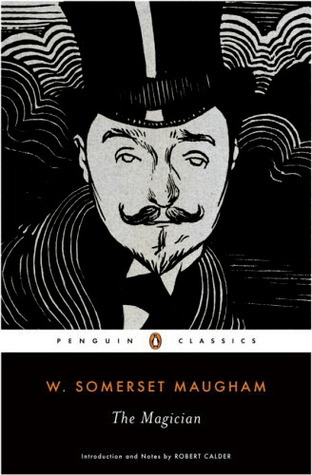
There is so much to unpack in this novel. Its theme of creating and reanimating life is so immoral, yet the narrative is guiltily compelling. Maugham presents a world of necromancy, sex magic, time travel, hallucinogenic spells and murderous revenge in which he leaves nothing to the imagination and where otherwise normal men and women are taken on an outrageous occultic ride.
At her fiancé Arthur Burdon’s request Margaret Dauncey has moved to Paris to experience life before their wedding. Mary is an artist and has found a room with Susie Boyd, her former teacher, and together they explore the art world of Paris. Arthur, a surgeon, lives in London and is presently visiting Margaret occasionally meeting up with Dr. Porhoët, a former medical school professor who continues to mentor him.
The four are taking an evening stroll when they meet Oliver Haddo an acquaintance of Porhoët. He is charming, intelligent, well-traveled and knows everything about any subject that comes up and as the days go by has insinuated himself into their lives. But something about him has unsettled them all. Margaret has an innate repulsion, Susie is fascinated though a little wary of his tales of Egyptian snake charmers and other stories that bend reality. Arthur, the scientific skeptic, is not impressed by these ridiculous events, while Dr. Porhoët listens quietly, as his hobby is research on the occult and unexplained phenomena. Porhoët tells them later Haddo is reputed to be a magician and practitioner of the dark arts, but finds such a negative assessment hard to believe in someone so charming and brilliant.
But is there truth to these rumors? With each luncheon or tea or after dinner walk Haddo brings suspicion and fear to the four. One evening, he puts his hand on a horse, ostensibly to steady it, but it trembles so severely at his touch it almost collapses, then at Margaret’s house her little dog is so fearful of Haddo he hides in a corner. When Haddo forces the dog come to him, the dog bites him and Haddo kicks it causing Arthur to attack him. This event is the beginning of Haddo’s revenge toward Arthur and his power over Margaret.
As the story unfolds we learn the truth of Haddo’s plans, of his mind control over Marget and watch as he degenerates into unspeakable experiments in his laboratory.
Maugham writes with such realism that I felt chills as I read through the necromancy operations. As I read later, this realism incensed Aleister Crowely the infamous mage and occultist of the time and model for Oliver Haddo whom Maugham had met in Paris. It is not a flattering portrait and Crowley, who has had great influence on modern magical and occult matters, irrationally accused Maugham of plagiarizing the story from other occult books.
Maugham denied Crowley’s accusations saying his information on the black arts and human experimentation came from research he had done in the British Museum. But his five years of medical school must have also helped!
Thoughts
I pondered the morality of reanimating the dead or creating a human body in a basin using the blood of a virgin and magical incantations with our own modern version that is medically and morally sanctioned. We herald as a great achievement creating life in a test tube with egg and sperm or stem cells that repair or regenerate other cells in the human body. Now, people who otherwise could not have children have a chance to be parents. And a devastating medical condition can be treated by our own stem cells. Is this the black arts reimagined, but for the Good? Will we regret any of this? I hope not….
At any rate, I enjoyed this book. It is a real page turner and I highly recommend it. For anyone participating in RIP it is perfect, but I do suggest no late night reading, unless all the lights are turned on!
The old alchemists believed in the possibility of spontaneous generation. By the combination of psychical powers and of strange essences they claim to have created forms in which life became manifest.
In vain they lit their furnaces, and in vain they studied their crabbed books, called up the dead, and conjured ghastly spirits. Their reward was disappointment and wretchedness, poverty, the scorn of men, torture, imprisonment, and shameful death.

