Mansfield Park (1814), Jane Austen

The nonsense and folly of people’s stepping out of their rank and trying to appear above themselves makes me think it right to give you a hint, Fanny, now that you are going into company without any of us; and I do beseech you and entreat you not to be putting yourself forward, and talking and giving your opinion as if you were one of your cousins…Remember, wherever you are, you must be the lowest and last….

Fanny Price is taken from her working class family to live with her more affluent aunt and uncle. Lady Bertram is her mother’s sister and it is suggested by her mother’s other sister, Mrs. Norris that taking Fanny in would relieve their sister of the burden and expense of raising another child. Fanny is 9 years old and a quiet and frightened child when she comes to Sir Thomas and Lady Bertram and their four children at Mansfield Park. For the next decade, while she is given everything material she could need, she lives a liminal life, sometimes included in the activities of her cousins and sometimes treated like a servant; decisions are made for her without her consent and criticisms of her thoughts and behavior are discussed by her aunts and uncle as if she isn’t there. Edmund, the younger of the two brothers, is her constant champion amidst the crassness and criticism of her Aunt Norris, who regularly reminds her of her humble place, regardless of how the Bertrams treat her or what they give to her.

Most of the action takes place through Fanny’s eyes and especially through her moral compass. Her cousins, the neighbors in the parsonage next door, are seen through her world view, which is exacting, unsentimental and harsh.

A Rigid Social Structure or is it just Fanny?

I don’t quite know what to make of Fanny Price. She has an unrelenting moral code that is so rigid and unforgiving it impedes her social interactions. With her delicate constitution she is forced to sit on the sidelines of many of life’s events, so she becomes the observer, the critic and the conscience-filter through which the motivation of each of her family and friends is measured. They ‘commit,’ what seem to me, infractions of the slightest intent or the folly of teenagers, yet to Fanny they are so grievous she cannot forgive.

I think there are subtleties of right and wrong, of etiquette and behavior during this period I am just not familiar. For instance, Fanny’s discomfort with Mary Crawford, which feels like plain old jealousy (over Edmund), yet I think even if she had not been Fanny’s rival, she would have found fault. Each person Fanny comes into contact with—Maria and Julia, her aunts, the Grants—can never live up to her impossibly high standards.

Who is Fanny, Anyway?

Edmund, from her first days at Mansfield Park, shows an almost 6th sense to Fanny’s material and emotional needs and comfort. He makes sure she is given a horse to ride every morning for her health, gives her a chain for the necklace her brother William gave her so she can wear it to the ball. Sir Thomas as well shows immense kindness to Fanny, especially once he returns from his business abroad. She accepts all of this with the appropriate gratitude, embarrassment and deference. But after the downfall of Maria and Julia, the break-up of Edmund and Mary Crawford, and Henry Crawford’s demise and finally, her triumph in winning Edmund, her quietude and deferential demeanor become something else. I see her as a conniver, who bides her time until she gets what she wants. Am I just mean, jaded or am I missing the point entirely?

I think there is a subtlety in this world that is foreign to me. For example, as loathsome as Mrs. Norris is to Fanny and everyone else at Mansfield Park, she is the least subtle and feels the most familiar. Her meanness comes from her own liminal life as a widow without a purpose or a place. She is a busy-body and treats Fanny abominably and tries to force the rest of the family to do her bidding often with disastrous results. She unnerves the Bertrams who want her gone from Mansfield Park; at Maria’s downfall, they get their wish. Yet, she is obvious in her brutishness; no one would expect anything different.

Austen 101

I would love to understand the details of this society; those minute cues and subtle looks that set Fanny off. If there is such a book that would explain it all to me, please let me know!
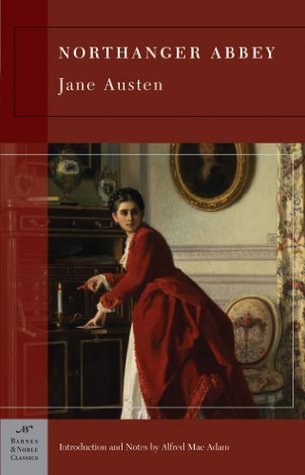

Northanger Abbey (1817), Jane Austen

….there seems almost a general wish of decrying the capacity and undervaluing the labour of the novelist, and of slighting the performances which have only genius, wit, and taste to recommend them….

Catherine Morland is seventeen when she accompanies her wealthy neighbor Mrs. Allen to Bath where her husband has been ordered to take in the healing waters for his gout. Catherine has lived a happy, physically active, carefree, but insulated life with her large family; her imagination developed through the mostly Gothic books she reads. She has never had a suitor, “never seen one amiable youth who could call forth her sensibility,” never “having inspired one real passion….” On her first excursion away from her family and the familiarity of village life, Bath exposes her to the complex society of her peers and widens her perspective on friendship and romance, with comical, frustrating and finally, joyful, results.

I really enjoyed reading this book, although it often had me on the edge of my seat. Austen puts poor Catherine through the ringer with her gullibility and worldly inexperience. She is completely unprepared morally to doubt the sincerity of Isabella Thorpe, the first ‘friend’ she meets at Bath and was not only goaded and duped several times by Isabella and her brother John, even her brother James took advantage of her naiveté. Catherine makes all kinds of gaffes in her friendship with Henry and Eleanor Tilney and could not stand up for herself in other situations and yet, I felt myself pulling for her after each blunder and felt relieved when she found the strength of character to make her own decisions. It is a good thing this is a short novel because it was all I could do to keep from going to the back pages and skimming the end!

One of the more interesting aspects of this book for me concerned Bath as a destination, not for healing, but for socializing during ‘the season.’ When I visited Bath and toured the Roman Baths, I do not remember this aspect of its history being told to us, just that it was an important example of Roman architecture and culture that capitalized on the therapeutic properties of the water. In Northanger Abbey, I do not recall the mention of anyone beside Mr. Allen in Catherine’s sphere who went for that reason. The young people met in the Pump Room, the Upper and Lower Rooms at the “fashionable hours” for tea, for meals, to socialize and to plan trips to the theater and outings throughout the countryside. That Austen herself lived for a time in Bath explains how she created the atmosphere and the details of the variety of people who would have spent time here.

Another aspect of the book I enjoyed is the intensity with which Catherine becomes obsessed with a well-known Gothic novel, called The Mysteries of Udolpho, by Ann Radcliffe to the extent she cannot put it down eschewing social engagements and asking her friends if they have read it. Of course, they had and Isabella recites a list of other ‘horrid novels’ Catherine will enjoy after she finishes Udolpho. “…but are they all horrid, are you sure they are all horrid?”* Catherine is hooked.

Austen uses the haunted house aspect of The Mysteries of Udolpho as the lens through which Catherine imagines Henry Tilney’s home. After she befriends Henry’s sister, Eleanor, and is invited to their home for an extended stay, Catherine’s obsession becomes fodder for a great bit of teasing by Henry when it is mentioned they live in an abbey. Catherine is excited to think “it is a fine old place, just like what one reads about.” Henry asks her if she has a stout heart and “nerves fit for sliding panels and tapestry?” She is not concerned since the home has never been uninhabited for years with the family coming back unawares and without giving notice “as generally happens.” Henry leads her on with a definitive description of a haunted house:

…you must be aware that when a young lady is introduced into a dwelling of this kind, she is always lodged apart from the rest of the family. While they snugly repair to their own end of the home, she is formally conducted by Dorothy the ancient housekeeper up a different staircase, and along many gloomy passages, into an apartment never used since some cousin or kin died in it about twenty years before. Can you stand such a ceremony as this? Will not your mind misgive you, when you find yourself in this gloomy chamber—too lofty and extensive for you, with only the feeble rays of a single lamp to take in its size—its walls hung with tapestry exhibiting figures as large as life, and the bed of dark green stuff or purple velvet, presenting even a funereal appearance?

How fearfully will you examine the furniture of your apartment!—And what will you discern?—Not tables, toilettes, wardrobes, or drawers, but on one side perhaps the remains of a broken lute, on the other a ponderous chest which no efforts can open, and over the fire-place the portrait of some handsome warrior, whose features will so incomprehensibly strike you, that you will not be able to withdraw your eyes from it. Dorothy meanwhile, no less struck by your appearance, gazes on you in great agitation, and drops a few unintelligible hints. To raise your spirits, moreover, she gives you reason to suppose that the part of the abbey you inhabit is undoubtedly haunted, and informs you that you will not have a single domestic within call.

(This passage goes on, reminding me of the Haunting of Hill House and just about any horror book or movie with a haunted house I have ever seen. It can’t be a coincidence)?

Henry continues highlighting every stereotypical element of a haunted house, forcing Catherine to insist she is not afraid. And so with this conversation fresh in her mind and her obsession firmly implanted into her imagination, she is lead to her room. Where, of course, she experiences almost everything Henry just described.

However, the days pass and most of what originally scared her finds a reasonable explanation in the light of day. Though many angst-filled events conspire to keep Henry and Catherine apart, it was a relief to finally end the book knowing they would be together.

Peace Breaks Out (1981), John Knowles

But no men got killed by the enemy, not one, on United States soil…They never got here. Do you realize what that saved the American psyche from? Think how we would have felt if we’d seen Germans parading down Fifth Avenue in New York, locking up President Roosevelt, pasting up orders on buildings telling what time we had to be home, what we couldn’t read, how much we’d be allowed to eat, if anything…What if you’d seen your house blow up, with your mother inside, and your baby sister, and your little dog.

This is a sequel to the young adult classic, A Separate Peace published in 1959, although it is a stand-alone book and does not require any knowledge of the first book.

The story takes place at Devon School, a prep school for boys in New Hampshire, just after WWII. The war factors into both books with profound effects on the character and aspirations of the boys. In A Separate Peace military service was inevitable due to the draft and affected how the boys interacted with each other and themselves, as well as their plans for the future. In Peace Breaks Out, the graduating class is the first in many years where the young men can look forward to a ’normal’ future. But they feel cheated that they aren’t going to be able to ‘do their part’ in fighting the bad guys ‘over there,’ so instead, they fight them at school.

The school becomes a microcosm of the fear the larger world feels in the aftermath of the war over Russian domination and Nazi sympathy. A cabal develops among the boys led by the editor of the school newspaper, Wexford, who plot against German apologist Hochschwender with disastrous results.

Pete Hallam, war hero and recent alum, who has come back to Devon school to teach history and physical education sees what is happening and tries to intervene. But suspicions on both sides are impossible to break through. When a stained glass window honoring the students who fought and died in the war is broken, the damage Wexford has done to Hochschwender’s character has dire consequences.

Knowles has a gift for enfolding the reader into the life of the school through seasonal changes which dictate the rhythm and activities of the boys. I found this to be true in the first book as well. Winter especially, when it is brutally cold gives the boys little time for physical activities, but a lot of time for scheming and plotting. And like the boys in this boarding school who are only able to leave with permission, we also are forced to stay and grapple with their fear, anger and suspicion of each other.

While there are some weak plot lines, Knowles has a gift for creating memorable characters and as in the first book, that aspect is strong in the second.

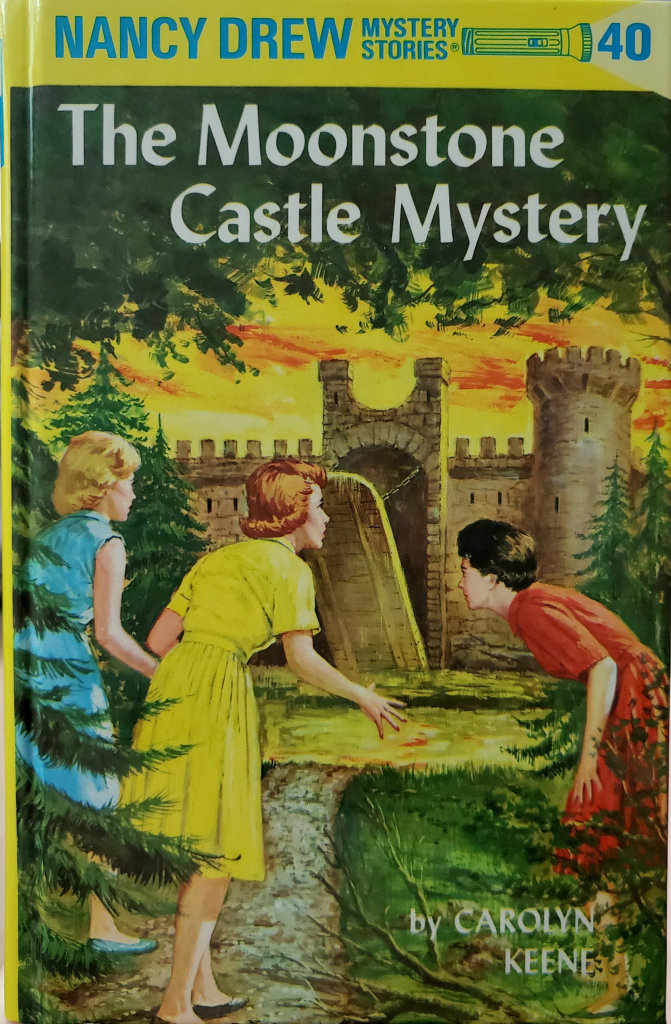
The Moonstone Castle Mystery (1963), Carolyn Keene

Bess and George were always interested in observing Nancy’s sleuthing procedures. They often wondered whether it was her charm, her straightforward manner, or her businesslike approach that unfailingly gained her entrance to offices and officials. Now, with little explanation on her part, the girls were ushered into the president’s office.

I am house sitting for my sister while she and my brother in law are in Massachusetts welcoming a new grandchild, who is now overdue, refusing to vacate the premises voluntarily. So, I am in San Diego a lot longer than I thought I would be!

While going through my sister’s bookshelves I found she has many of our old Nancy Drew books and since one of the book challenges I signed up for this year calls for a building in the title, I decided to give The Moonstone Castle Mystery a try. Like many girls of a certain age (ahem), Nancy Drew “girl detective” was a popular series along with Cherry Ames “nurse detective” and the Little House books.

As I began to read, I wondered how dated this would feel and if it had any relevance to me, now, or for today’s young readers.

Nancy lives with her lawyer father and housekeeper, Hannah Gruen (her mother died when she was a baby) and often helps her father with his cases. This is book number 40, so Nancy is a young woman at this point, with many cases under her belt. She is a skilled, confident and bold investigator and easily puts together answers from the clues she and her trusty girlfriends, Bess and George, find.

In this particular case, her father has asked her to go to the town of Deep River to find the whereabouts of a missing child as he suspects the heiress of a fortune is actually a fraud and the missing child in Deep River the real heir. With Bess and George, Nancy drives her beloved convertible to Deep River.

As in many mystery stories that start out with a simple question, Nancy and friends are soon caught up in something much bigger than a missing child. Someone is on to her and does not want her to discover the truth.

In the course of the trip she is followed by an unknown man, her car is stolen, while boating a crazed man rams her boat, she is briefly kidnapped, spied upon, chased and then is the chaser, figures out how to keep the drawbridge at the castle from rising, she interviews creepy people and decodes their answers and discusses the next move with Bess and George.

In short, nothing daunts Nancy Drew. She is not shy or hesitant. She does not question herself and willingly goes into the unknown. With Bess and George, who have accompanied her on many cases, these young women have honed their investigative skills and are game for any challenge. When more than one lead has to be tracked down at once, the young women divide up the duties, meeting later to discuss what they found.

So it was a real shock when Nancy invited their boyfriends, who happened to be counselors at a camp nearby, up for the weekend to help with this case. From the moment Ned, Dave and Burt arrive, Nancy defers to Ned with questions she had already gone over with Bess and George, letting Ned take the lead when she is perfectly capable of figuring out things herself.

Thankfully, the young men are only there for the weekend, because they all get into more scrapes and dangerous situations while the men take charge! In fact, Ned is the reason Nancy is kidnapped while they are checking out the castle. His, “wait here while I go down to the cellar, because it is too dangerous,” left Nancy alone where she is drugged and pulled into a closet. Nancy would never have balked about going down to the cellar herself.

When I asked myself if the original Nancy Drew is still relevant, despite the obvious awkwardness above, I found the actual mystery held my attention. Though some of the language and concepts are dated and obsolete (think doing detective work without computers or cell phones, getting a busy signal at the hospital because ‘the wires are crossed’ and referring to someone as queer, but not in reference to their sexuality), it is a good story with complex and layered clues leading to even more complicated situations.

These books have gone through many reprints and some modern updating since they were first published in the 1930s, but their portrayal of young women who are smart, confident, think for themselves, work together and trust each other is timeless and universal and certainly relevant in the 21st century.

Have you read any of the Nancy Drew mysteries as an adult?

The House of Mirth (1905), Edith Wharton

You asked me just now for the truth—well, the truth about any girl is that once she’s talked about she’s done for; and the more she explains her case the worse it looks.  

Though Lily Bart didn’t grow up rich, she was born into a comfortable and respectable home with relatives high on the social scale. Like most girls in this class her only purpose in life is to find a wealthy, respected husband. Lily doesn’t just have hopes this will happen, she is very good at making it happen.

But it all comes crashing down when her father makes a series of bad business deals leaving her at the mercy of relatives and friends. Her luck holds out longer than many in this situation, because her beauty and charm is sought after and admired in her ‘set’ who continue to include her in their social gatherings, weekend outings and trips abroad.

Because her future is dependent on whom she marries Lily must calculate and weigh every conversation and action she makes. She becomes a keen observer of the most minute details of what is socially acceptable and there are so many! One wrong word or action, one misinterpreted conversation or negative comment or showing too much interest in a man or not enough, can have devastating consequences.

The Power of Gossip and Lies

When the gossip about Lily and the unfounded lies begin to run rampant, the same friends who welcomed her into their world at her father’s death, abandon her and are willing to watch her fall rather than come to her defense and risk damaging their own reputations. As Mr. Rosedale admits to her,

Mrs. Dorset…did you a beastly bad turn last spring. Everybody knows what Mrs. Dorset is, and her best friends wouldn’t believe her on oath where their own interests were concerned; but as long as they’re out of the row it’s much easier to follow her lead than to set themselves against it, and you’ve simply been sacrificed to their laziness and selfishness.

One misstep in judgment (going to the apartment of her close male friend alone) begins the downward spiral of gossip and innuendo Lily never recovers from. And her pride makes it impossible for her to fight back.

Not only has the gossip killed any prospect for marriage, the question of how can Lily then support herself must be considered. In this class system, women like Lily are born to be dependent. There is never a question about working or learning a trade. Though she tries her hand at various occupations, Wharton writes a remarkable passage of truth that Lily is conscious of:

She had learned by experience that she had neither the aptitude nor the moral constancy to remake her life on new lines to become a worker among workers, and let the world of luxury and pleasure seep by her unregarded…Inherited tendencies had combined with early training to make her the highly specialized product she was: She had been fashioned to adorn and delight; to what other end does nature round the rose-leaf and paint the hummingbirds’ breast?

 Wharton’s Unsentimental Pen

I have railed against Wharton for writing such depressing novels as Ethan Frome  and Summer. It isn’t that I expect a fantasy of happy endings, but Ethan Frome, Charity Royall and Lily Bart cannot catch a break from the rigid social norms they struggle against.

However, about half way through The House of Mirth I had a stop-me-in-my-tracks moment: Wharton doesn’t write depressing novels, she just writes with an unsentimental pen. She chooses to write stories about people’s fate or more precisely that they can’t escape it once an action or word sets them on that trajectory; that social norms are so rigid and a person’s duty to their class is so morally strong there is no wiggle room for escape or independence from it. For whatever reason, Wharton writes about the injustices of a system that kills passion, desire and freedom.

Women as Instigators

It is horribly sad that women in the novel are the instigators of the lies and stories that bring Lily down and that her own aunt with whom she is living believes the gossip about Lily accepting unwanted attention from married men. She not only believes it, but instead of asking Lily outright if what people are saying is true, she is incensed that Lily has allowed herself to be talked about in the first place,

It was horrible of a young girl to let herself be talked about; however unfounded the charges against her, she must be to blame for their having been made.

When your own family members turn against you, what recourse do you have? And when you know fighting back is useless, how do you cope?

Bullying in The House of Mirth

While The House of Mirth is rooted in its time period, something struck me as very contemporary. Lily’s death is suspicious in terms of it being an accident or self-inflicted. But the stage was set because of the devastating effects of the bullying and meanness she was subjected to. This is the same behavior and sometimes the result many teenagers of today are forced to endure.

Lily Bart shows us the tragic outcome when this behavior is allowed to grow and fester unchecked. I think this puts to rest those critics who wonder if  classic literature should still be taught in schools.

Ethan Frome (1911), Edith Wharton

This was a very depressing novel. Let’s just get that out of the way. Like another of Wharton’s New England novels Summer, which I read last year, she once again creates a character whose life has promise and potential, but bad choices made early on coupled with poverty and duty to family ruin any chance of freedom. Ethan Frome’s draining, joy-sucking life permeated every page.

Wharton creates a bit of mystery surrounding Ethan Frome in the opening pages. The unnamed narrator who arrives in town on business notes his somber countenance, “something bleak and unapproachable in his face, and he was so stiffened and grizzled that I took him for an old man,” yet he was only 52. The coach driver explained he has looked that way since ‘the smash-up.’ And with that, the strange, sad tale of Ethan Frome begins.

Frome is many years into a loveless marriage. He and his wife, Zeena, live in the Frome family home eking out a slim existence from soil that doesn’t yield much. He asked Zeena to marry him out of gratitude for helping him nurse his sick mother. Right after they marry her real or imagined ill health makes her unable to take care of the home, so she enlists the help of her young cousin, Mattie Silver, although it is soon clear she has no household skills.

Mattie’s youth and joy for life is Ethan’s one bright light and he begins to care for her deeply. When Zeena announces that her new doctor wants her to get a proper hired girl, because “I oughtn’t to have to do a single thing around the house,” Ethan is devastated. Mattie will have to leave because they can’t afford to pay for two girls, although she has no family to take her in. Ethan spends days frantically looking for a way to run off with Mattie, until he realizes its futility. The day he takes Mattie to the train station he stops to take her sledding. Both are distraught over their impending separation admitting they cannot live apart and make a pact to end their pain by sledding into a tree. They are severely injured, but both live. Ethan is left with a limp and a scarred forehead, but Mattie sustains a spinal injury that leaves her permanently disabled.

The action skips to the present when the narrator, who has only heard bits and pieces of this story is invited by Ethan to stay the night during a snow storm. When the front door is opened he hears more than one voice coming from the kitchen. He is shocked to walk in on both Zeena and Mattie sitting around the kitchen table.

When he goes back to his boarding house, run by a childhood friend of Ethan’s she explains that yes, after the accident, Zeena took Mattie back and nursed her as best she could and without any family to return to the three have lived together for 24 years. She tells him, “If she’d ha’ died, Ethan might ha’ lived; and the way they are now, I don’t see’s there’s much difference between the Fromes up at the farm and the Fromes down in the graveyard; ‘cept that down there they’re all quiet, and the women have got to hold their tongues.”

Though the story is terribly tragic I admire Wharton’s writing. She is not sentimental or overly emotional, but matter of fact. The event happens or the choice sets in motion tragic consequences, the character accepts his or her fate and makes new choices and with them we move on. As in real life we have to get on with whatever hand we are dealt and this is how Wharton writes.

Except that I found it hard to just let go of Ethan’s fate. Is it too much to ask to give him a little happiness after having to leave college to come back home to care for his father, then his mother, then his wife and finally both his wife and unrequited lover? Couldn’t Wharton give him a little better financial situation or let his wife die young or…something?

However, like Charity, the main character in Summer, who similarly had to pit personal fulfillment against duty, what the reader finds here is reality. Both Ethan and Charity made foolish choices the first time they fell in love, which left them with life-altering consequences they could never break away from. And maybe that is the moral or the cautionary tale here; what you do when young comes back to haunt you. The whole trajectory of your life can change in an instant, so make good choices!

Right.

Try telling that to any young person in love!

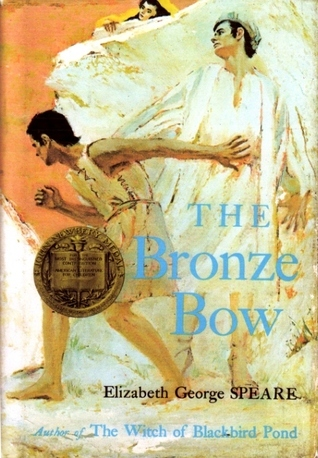
The Bronze Bow (1961), Elizabeth George Speare

“—He trains my hands for war,

so that my arms can bend a bow of bronze.”

When I read The Witch of Blackbird Pond last year, Elizabeth George Speare drew me into 17th century colonial Connecticut by her attention to historical detail and engaging writing style. I would say Speare surpassed herself in The Bronze Bow set during the time of Jesus in 1st century Palestine. This is the story of tormented Daniel bar Jamin, a young renegade blacksmith whose hatred for the Roman occupation of his ancestral land fuels his every waking moment. Sold to an abusive blacksmith at age 13 when there wasn’t enough food for the family, he fled to the mountains above his town 5 years later and joined a group of like-minded warriors. He is now 18 and he and the other young men are restless to fight, but the leader of the group, Rosh, keeps putting them off sending them out only to raid the fields of their Jewish neighbors telling the young fighters they need to gather more men before they can take action against the Romans.

When word comes to Daniel that his grandmother is dying leaving his sister alone, he puts his warrior plans on hold and moves back into the city to take care of Leah. It has been five years since Daniel saw his sister and grandmother. When he knocks on the door Leah is cowering in a corner and he realizes at 15, she is still traumatized over the unbearable experience of watching their father die by crucifixion at the hands of the Romans. Daniel’s mother stayed with him on the hill and later died of exposure. Five-year old Leah escaped from a neighbor’s house and was found at the crosses for an undetermined length of time. But it was long enough to give her nightmares and a fear of all people.

The town’s blacksmith Simon, called the Zealot, tells Daniel he wants to leave his business and follow a new preacher named Jesus. He is not sure how long he will be gone, but tells Daniel he can use his shop, the tools and materials as his own and move into the house connected to it. After much persuasion and the kindness of neighbors who build her a litter, Leah is carried like a queen to her new home. Daniel attracts a wide clientele with the skills he perfected on the mountain and is able to provide good food and clothing for Leah for the first time in her life. He also begins recruiting a band of youth who are itching to fight the Romans who he hopes will strengthen Rosh’s group.

Meanwhile, Daniel has renewed a friendship with a boy he knew from school. When Joel and his sister Malthace hear about the warrior group they, too, want to fight. Boy, girl it doesn’t matter, they all want the Romans out! However, their family is moving to Capernaum and Joel is supposed to go away for rabbinical studies.

It is against this backdrop of violence and hatred that Daniel first hears Jesus speak. He is confused when Jesus addresses the crowd and talks about building the Kingdom of God, which is what he wants, but Jesus’ kingdom doesn’t seem to come with a war, so how would it get built? And Joel is confused because Jesus says things that don’t sound like a rabbi, “He practically said it was alright to eat without washing our hands. Perhaps it’s dangerous to even listen to him. And yet—.”

And yet, against everything Daniel and Joel have lived for, the righteous actions against the oppressor and the righteousness of the Law, they are at once drawn then repelled over and over by what Jesus says. The first crack in Daniel’s emotional armor comes when his friend Simon the Zealot, the former fighter for Israel has decided to give up his shop and everything else about his past life and follow Jesus. He tries to explain to Daniel what has changed, but Daniel is incensed.

“Supposed they put chains on all of you and drag you off to prison.”

“He [Jesus] says that the only chains that matter are fear and hate, because they chain our souls. If we do not hate anyone and do not fear anyone, then we are free.”

In the end, Daniel’s hate could not be sustained…

This novel is so rich in the details of 1st century daily life and Jewish ritual during the time of the Temple. Food, clothing, commerce and the different ways in which people react to the Roman occupation make this novel very realistic. Speare treats the complexity of feelings that Jesus’ words bring to the various characters with depth and honesty as they struggle to make sense of their long-held beliefs.

Speare won the 1962 Newbery Medal for The Bronze Bow, a young adult novel suitable for adults 🙂

A Tree Grows in Brooklyn (1943), Betty Smith

Johnny: Anybody can ride in one of those hansom cabs, provided they got the money. So you can see what a free country we got here…In the old countries, certain people aren’t free to ride in them, even if they have the money.

Francie: Wouldn’t it be more of a free country if we could ride in them for free?

Johnny: No, because that would be Socialism and we don’t want that here.

About a year and a half ago I heard a program on NPR about the publishing industry and World War II; that publishers put out specially formatted books with thin paper and in a particular size to fit easily into the pocket of a soldier’s uniform. They published classics as well as light reading and were passed from soldier to soldier throughout the fields of battle. A Tree Grows in Brooklyn was one of the most requested titles, because it reminded the soldiers of the values they were fighting for.

The Story

It is a Saturday during the summer of 1912 when we meet 11 year-old Francie Nolan. She lives with her brother Neeley and her parents, Katie and Johnny, both born in the United States, from Austrian and Irish backgrounds respectively. They live in a third-story walk up on a street with other immigrant Irish. Johnny is a singing waiter beloved by his friends and family, but alcohol has taken over him so his work is sporadic. Katie has become the breadwinner of the family and works as a ‘janitress’ cleaning homes and offices.

Francie and Neeley are always hungry, their clothes are not thick enough to protect them from the biting cold of winter and their home is not always heated. But they themselves are breadwinners as collectors of bits and bobs that they sell to the junkmen for pennies which will buy stale bread. Saturday afternoon being the most important day of the week, the kids scheme against each other for the best deals at the storefronts where they trade their stashes of rags and bits of metal and anything they can find to sell. With that money they buy food for the family, saving a penny for a sweet or two.

The book is told through budding writer Francie as she watches and observes the people and conditions around her. The narrative is a simple one as Francie grows from an 11 year-old to 17: her father dies of alcoholism, her mother takes on more work, she reads voraciously and realizes there is more to the world than Williamsburg, Brooklyn, New York; she falls in love, is jilted, she fears her brother, who likes to sing, will end up like her father; she must give up her education so her work can support her mother and brother, but the desire for education burns so hard she takes college classes at night and during the summer and is able to skip high school altogether and is accepted to a college in Michigan. Her mother remarries and the family moves out of poverty.

Through Francie, Smith writes with such detail about early 20th century Williamsburg and the crushing and demeaning poverty of its inhabitants. She writes with a meticulous hand the strategies the children employ that will get them the most for the items they have collected throughout the week: which stores will pay them the most, whether this shop owner likes girls better than their brothers or that shop owner will give more to the boys, and the pride the children feel contributing to the family bank (a can nailed to the closet floor). When Katie asks Francie to shop for food she is given instructions on what to say and how to approach the butcher, the breadmaker and so on, in order to get the best deal.

My Thoughts

Yet, the story is not just the narrative, but the characters that people Francie’s life: the teacher who at first encouraged her writing until she started writing the truth about her hard life, who then told her writing is supposed to be full of beauty; her aunt Sissy, the ‘floozie’ who married three times, had 10 children that died at birth, yet is the family member everyone turns to in times of crisis; the Jewish and German shop keepers with whom Francie deals, who can be gruff and mean to the poor children one minute only to give them something extra the next; her father Johnny who she is so close to, yet for all his patriotism about freedom, is never able free himself from his addiction; Katie, who wanted to make a different world for her children, took her mother’s advice to read from the Bible and Shakespeare,

“…every day you must read a page of each to your child—even though you yourself do not understand what is written down and cannot sound the words properly. You must do this that the child will grow up knowing of what is great—knowing that these tenements of Williamsburg are not the whole world.

And the titular tree that grows tall throughout Williamsburg like an umbrella, because “it likes poor people” has the tenacity to succeed like the human inhabitants because when it is cut down, will find a break in the cement, push through it and grow again.

The book was published in 1943 when, although the soldiers didn’t know it, was right in the middle of the war. They were not that far removed from their own immigrant past, the tales of the ‘old country’ that were still real for their parents and grandparents. So, it is fair to say that this novel is really a story of immigrant America, how each generation built it up from the succeeding one.

And which may be why the book was so heavily traded among soldiers who saw in the pages their own mother and sister who kept the family together, whose fathers worked any job they could get, a little brother they missed; the same immigrant neighbors, who regardless of their poverty, knew America could give their children freedom, the ability to determine their own destiny which set America a part from the enemies they were fighting.

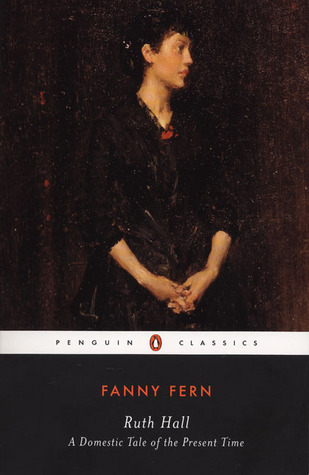
Ruth Hall (1855), Fanny Fern

All the world knew it was quite unnecessary for a pretty woman to be smart

Fanny Fern (1811-1872 ) was one of the most well-known women writers in America. As a journalist she had the distinction of being the first woman to write a signed weekly column at a major publication and one of the most highly paid writers, male or female, in America. Although her family was literary and well-to-do her success came in spite of them.

Fanny Fern 

Ruth Hall is a loosely based autobiographical account of Fern’s struggles as a widow and single woman with children trying to find her way in a society that has no place for women on their own. Though she remarried, her husband was violent and she left him, scandalizing her family. Through the trials and hardships of Ruth, who is similarly widowed with two children and left helpless by in-laws and family alike we understand the helplessness of women who have no male relatives for protection, financial help and shelter.

Ruth’s husband Harry adored her and their marriage was happy, except for the dislike his parents had toward her. Strict and stern in their religious beliefs, they lived their lives by denying themselves any pleasure. To them Ruth was blasphemous in her openly loving behavior toward her husband and daughter. She was full of flights of fancy and far too emotional and definitely not good enough for their son, which they had no trouble saying to her face, to Harry and to any friend or neighbor. Even Ruth’s grief at the deaths of her daughter and Harry was disregarded as an exaggerated display in order to elicit sympathy.

What characterizes this novel is the unbelievable behavior of Ruth’s in-laws, her father and Hyacinth, her brother toward her situation as a widow. Though they are all able to help financially, they refuse. By the time Harry dies they have had two more children leaving Ruth with three options: remarry, give up her children or go away. Even her brother rebuffs financial help in her name when a friend of Harry’s approaches him at the funeral with a financial offer for Ruth put together by Harry’s friends. Knowing the code of ethics puts the responsibility for Ruth on him and his father he refuses; not because they are going to help her, but to preserve the family’s reputation.

Harry’s parents do not believe Ruth can care for the girls and are anxious to get their hands on them. Ruth lives in squalor in an attic room where there is not enough food for the three of them. As heartbreaking as it is she relents and allows Katy, the oldest, to stay with her grandparents until she can find the money to get her back. Poor Katy suffers abuse and continual denigrating of her mother.

An attempt to teach is a failure. The last option is writing, which Ruth had some success at as a school girl. She sends a few samples to Hyacinth, who has become an editor at a magazine, certain he will help her. After all she is not asking for money, but to work. His reaction is to once again stand in her way with a response that will haunt him later: “I have looked over the pieces you sent me, Ruth. It is very evident that writing never can be your forte; you have no talent that way…I would advise you to seek some unobtrusive employment.” Like so many with a dream that is demeaned and thwarted, the response emboldens her and sets her on fire!

If this sounds like a melodrama, it is. From one small magazine to another she goes with her youngest daughter in tow, only to be rejected again and again until finally she finds two editors who will pay paltry sums for 8 articles a week between them. Mind-numbing and backbreaking work yet this is for experience, because the amount is too small to get Katy back. She keeps writing; sometimes because there is no money for a candle, she writes by the light of the moon.

But finally, the public begins to recognize the words of “Floy,” her pseudonym and her reputation soars. She takes all of the articles she wrote for the two magazines and publishes them in book form to enormous success. She is noticed by the publisher of one of the most popular magazines in the country and offered an exclusive deal. This publisher, Mr. Walter, comes to the rescue like an angel at a train wreck who miraculously saves passengers from certain death, but in this case he is an angel with a contract to write not 8 articles a week, but only one, with a payment so large she can quit the other magazines, get back her daughter and move into the home of her dreams.

While it is easy to see this novel as overly exaggerated and melodramatic it does underscore the vulnerable position women, who through no fault of their own, are alone. Even women with means, like Ruth, have no guarantee they will be cared for/can care for themselves. Throughout the book her family is unfeeling to her pain and dire straits as if she is at fault her for her situation. Her in-laws, her father and her brother all want to protect their assets, instead of helping her. They expect, with complete lack of emotion, that she should give her children away, that it would be better for them and easier for her to find her way.

That she defied tradition and convention and made a success of herself without their help comes back to humiliate them. At the very end of the story Fern writes scathing scenes of confrontations they each have from friends and business acquaintances calling them out over turning their back on their daughter, their sister, their daughter-in-law. I only wish Ruth could have known this!

The Case of Charles Dexter Ward (1941), HP Lovecraft

…he was never a fiend or even truly a madman, but only an eager, studious, and curious boy whose love of mystery and of the past was his undoing. He stumbled on things no mortal ought ever to know, and reached back through the years as no one ever should reach; and something came out of those years to engulf him.

I had a lot of trepidation toward this book. H.P. Lovecraft is often called a ‘master of horror,’ a genre I do not enjoy. But when the opportunity came up to choose a Rhode Island author through the Reading New England Challenge, I decided to take the plunge and picked Lovecraft’s, The Case of Charles Dexter Ward.

Reincarnation—-Alchemy—-Calling in Demons and Spirits—-The Slave Trade

The story concerns young Charles Dexter Ward who begins innocently enough to research a 17th century ancestor, Joseph Curwen, but becomes so caught up in the work that it is obvious to all around him he has gone too far. And soon it looks like Charles begins to actually become Curwen, through reliving his life as a mage and master of the black arts of Renaissance magic. Charles finds Curwen’s journal and papers, learns the rites and rituals, the formulas, the chants, and he learns of his trafficking in slaves who were kept for unimaginable purposes. Charles spends several years traveling throughout Europe in search of obscure manuscripts and books and to study in secret with other masters of this lost art.

He also learns Curwen met a violent end when his neighbors had enough of his odd behavior, the odors and otherworldly sounds that came from his house, the changes in weather, the depressive and ghostly feelings that emanated throughout the town and the many suspect incidents surrounding him forcing the men of the town to confront him. On that fateful night, they marched to his home, but whatever it was they saw in his house it caused some to go insane and the rest such fear no one ever spoke of it.

One hundred and fifty years later his young relative Charles Dexter Ward, who bears a striking resemblance to Curwen, after researching his life and himself learning the rites and rituals of the alchemic mage comes across Curwen’s ashes and is able to reanimate him. But Curwen kills him and resumes his evil life as well as pretending to Charles’s family he is their son. However, his personality, his handwriting and vocabulary are so archaic that he is deemed insane and is placed in a mental institution. It is only after Charles’s life-long physician Dr. Willett, who has never lost hope he could help Charles get through his insanity, the truth of this horrendous mystery is solved.

But what is the horror? While there are nebulous descriptions of human torture, repetitions of magical incantations that leave Charles’s parents and servants scared and concerned, Dr. Willett’s absolutely harrowing escape through the laboratory of alchemy, descriptions of evil presences that leave traces in rooms, so little is actually detailed. We are taken on this journey throughout multiple centuries with hints, generalizations and whatever our imaginations can create. The blood and gore is vague, what the ‘organic creatures,’ who have been living in the bowels of the lab for centuries really are with their howls and sounds of pleading, is not so much horrifying as it is mysterious. Lovecraft gives just enough information to make you want to know more, to keep going with the story in hopes something concrete will explain everything.

This is the kind of horror in our minds, what we create from what we think someone is saying. Like Shirley Jackson’s, The Haunting of Hill House where the horror isn’t of the concrete monster-type or of blood and guts flung about, but is determined by how active is our individual imagination. There is so much power in words, so much power in tiny suggestions that scare us in our own minds that subtlety is all that is needed to make the reader see the absolute worst.

I am not sure if this way of story-telling was intentional by Lovecraft or just the way I received it, but it was very effective and in the end, I was left with so many questions and that ache to know more. Which means this story was successful, because that one untied string or element left unsolved keeps me in the story, keeps me in the mystery.

Well done, Mr. Lovecraft, you just made a new horror convert…or at least, a new Lovecraftian!